
Canada Spent Decades Tolerating Trade Barriers With Itself — Then the Trade War Made Them Impossible to Ignore
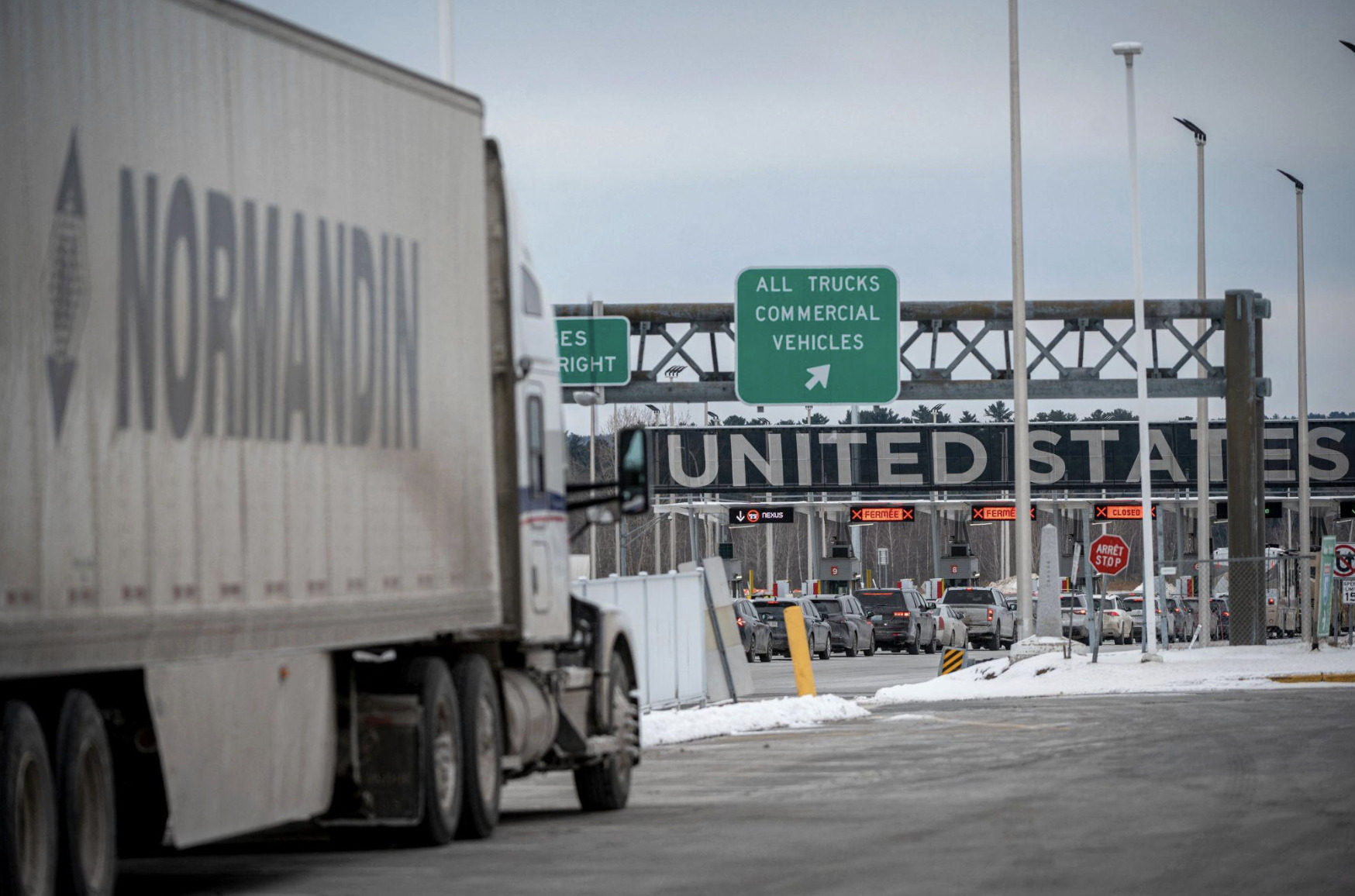
There is a fact about the Canadian economy that sounds like a joke until you sit with it, at which point it starts to sound like a scandal: in a great many cases, it is easier and cheaper for a Canadian company to sell its goods or services into another country than into another province. A trucking firm, a winemaker, an engineer, a manufacturer of building materials — each can run into a thicker wall moving from Ontario to Quebec, or from Alberta to British Columbia, than moving from Canada to a foreign market. For most of the country's modern history, this was filed under "annoying but manageable," a quirk of federalism that economists grumbled about and almost no one in power felt any urgency to fix. The trade war with the United States changed that calculation overnight, and turned one of Canada's oldest self-inflicted wounds into the most promising economic opportunity it has had in years.
A country that taxes itself at the border
The barriers in question are not customs posts or literal tariffs — Canada is, on paper, a single internal market, and its founding documents were meant to guarantee free trade between the provinces. The reality is a dense thicket of regulatory differences that function exactly like a tariff without ever being called one. Provinces maintain their own technical standards, their own licensing regimes, their own rules for everything from food labelling to construction to the size and weight of trucks permitted on their highways. A product or a professional that is perfectly legal and certified in one province may require costly re-certification, re-labelling, or re-licensing to operate in the next.
The examples range from the consequential to the faintly ridiculous. Professional credentials often do not transfer cleanly across provincial lines, so a qualified worker can be forced to re-qualify to do the same job a few hundred kilometres away. Trucking firms must reconfigure loads to satisfy differing provincial regulations. And the long-running saga of alcohol — the difficulty, in many cases, of simply shipping wine or beer directly from a producer in one province to a customer in another — became the emblem of the whole problem, a barrier so obviously absurd that it has been cited for years as shorthand for the entire dysfunction. Each rule, taken on its own, has some plausible local justification. Taken together, they amount to a country quietly taxing itself at its own internal borders.
The price of the wall
For a long time the cost of all this was abstract enough to ignore, which is precisely why it survived. But economists have spent years trying to put a number on it, and the estimates are large enough to command attention. Studies from a range of institutions have placed the cost of internal trade barriers in the tens of billions of dollars in lost economic output, with some analyses suggesting the barriers act like a hidden tariff of several percentage points on goods crossing provincial lines. Removing them, by the more optimistic estimates, could add a sum to national GDP comparable to a meaningful permanent boost to the entire economy — wealth that already exists in potential and is simply being left on the table by regulation.
This matters far beyond accounting. A fragmented internal market makes Canadian firms smaller and less efficient than they could be, denying them the scale that comes from selling freely into a market of the whole country rather than carving up their ambitions province by province. It feeds directly into the productivity problem that has haunted Canadian policy for years, the persistent sense that the economy underperforms its potential. A business that cannot easily grow nationally has less reason to invest, less capacity to compete internationally, and less room to raise the wages of its workers. The internal wall does not just cost a number on a spreadsheet; it shrinks the horizon of what Canadian companies are built to attempt.
Why nothing changed for so long
If the cost is so clear and so large, the obvious question is why the barriers survived decade after decade, through governments of every stripe. The answer is the structure of Canadian federalism itself. The barriers are overwhelmingly provincial creations, sitting squarely within provincial jurisdiction, which means the federal government cannot simply legislate them away. Dismantling them requires the agreement of provinces that each have their own regulations, their own protected local interests, and their own reasons — some principled, many merely habitual — to guard the status quo.
There have been attempts. A national internal-trade agreement was negotiated to replace an older and weaker one, intended to lower the barriers and establish common rules. But like so many such efforts, it arrived riddled with exceptions, the long lists of carve-outs through which each province preserved exactly the protections it cared most about. The result was progress on paper that left much of the practical wall standing. The deeper obstacle was never legal so much as political: removing a barrier produces a diffuse benefit spread across the whole country, while the cost of removing it falls on a specific, organized local interest that fights to keep it. Diffuse benefits rarely beat concentrated interests, and so the wall endured.
The shock that changed the politics
What years of economic argument could not accomplish, a foreign trade war did almost at once. When the relationship with the United States — the destination for the overwhelming majority of Canadian exports — turned hostile and tariffs threatened the single market Canadian businesses had organized themselves around, the country was forced into a sudden and uncomfortable self-examination. If selling south of the border was going to become harder and less reliable, where else could Canadian firms sell? The answer, embarrassingly, was sitting in plain sight: to one another, in a domestic market they had spent decades making artificially difficult to access.
The irony landed hard. A nation that had tolerated internal barriers for generations discovered, under external pressure, that it had been kneecapping its own ability to trade with itself at exactly the moment it most needed that option. Suddenly the abstract economists' complaint became a matter of national resilience. Tearing down the internal wall stopped looking like a tidy efficiency reform and started looking like a strategic necessity — a way to make the Canadian economy more self-reliant, more resilient, and less hostage to the decisions of any single foreign capital. Internal free trade became, almost overnight, a genuine political priority rather than a perennial good intention, with federal momentum behind the idea of finally building one Canadian economy in fact and not merely in name.
The hard part is still the hard part
It would be naive to assume the wall will now simply fall, and the obstacles that preserved it have not vanished. The fundamental tension remains: meaningful change still requires provinces to surrender regulatory turf, and the concentrated interests that benefit from particular barriers will still resist losing them. There is also a genuine policy debate beneath the rhetoric, between two routes to the same goal. One is harmonization — getting provinces to adopt identical standards, which is slow, fraught, and endlessly negotiable. The other is mutual recognition — agreeing that whatever is good enough to be sold or practised in one province is automatically good enough for all the others, which is faster and more powerful but asks provinces to trust one another's regulators in a way they have long been reluctant to.
The momentum is real, but momentum has dissipated before. The history of Canadian internal trade is a history of grand announcements followed by exceptions that hollow them out. Whether this moment proves different will depend on whether the urgency created by the trade war outlasts the trade war itself, and whether governments are willing to accept the concentrated political pain of removing barriers in exchange for the diffuse and longer-term national gain.
A wound Canada can actually choose to heal
What makes this story unusual, and genuinely hopeful, is its rarity in economic policy: this is a problem entirely of Canada's own making, which means it is one Canada can fix entirely on its own. Most of the forces buffeting the economy — foreign tariffs, global interest rates, commodity cycles — are beyond any single country's control. The internal trade barriers are not. They were built by Canadian governments, and they can be removed by Canadian governments, without anyone else's permission. The opportunity is to recover, through nothing more than political will, a substantial amount of prosperity the country has been denying itself for no good reason.
That is the quiet significance of the moment. The trade war was a genuine threat, and much of the response to it will be defensive and painful. But it also did something a generation of reports and warnings could not: it made Canadians look at the walls they had built between themselves and ask, finally, why they were there at all. If the answer turns out to be that they never made much sense, and if the country acts on that realization before the urgency fades, the trade war may end up having forced Canada into one of the smartest things it could possibly do — which is to stop, at long last, charging itself a toll to be a single country.

Daniel Hughes
Sustainability & Policy Correspondent
Daniel is interested in how environmental policy translates into real urban change. He specializes in sustainable mobility, climate-focused city planning, and the political frameworks behind transport systems. His writing brings together data, policy analysis, and on-the-ground impact, offering a clear view of how sustainability initiatives affect everyday urban life.
Advertise With Toronto Union 24
Reach over 500,000 engaged Canadian readers monthly. Premium placements available for Q2 2026.
Learn More Noah Bennett