
Cottage Country and the Enduring Pull of the Canadian Summer
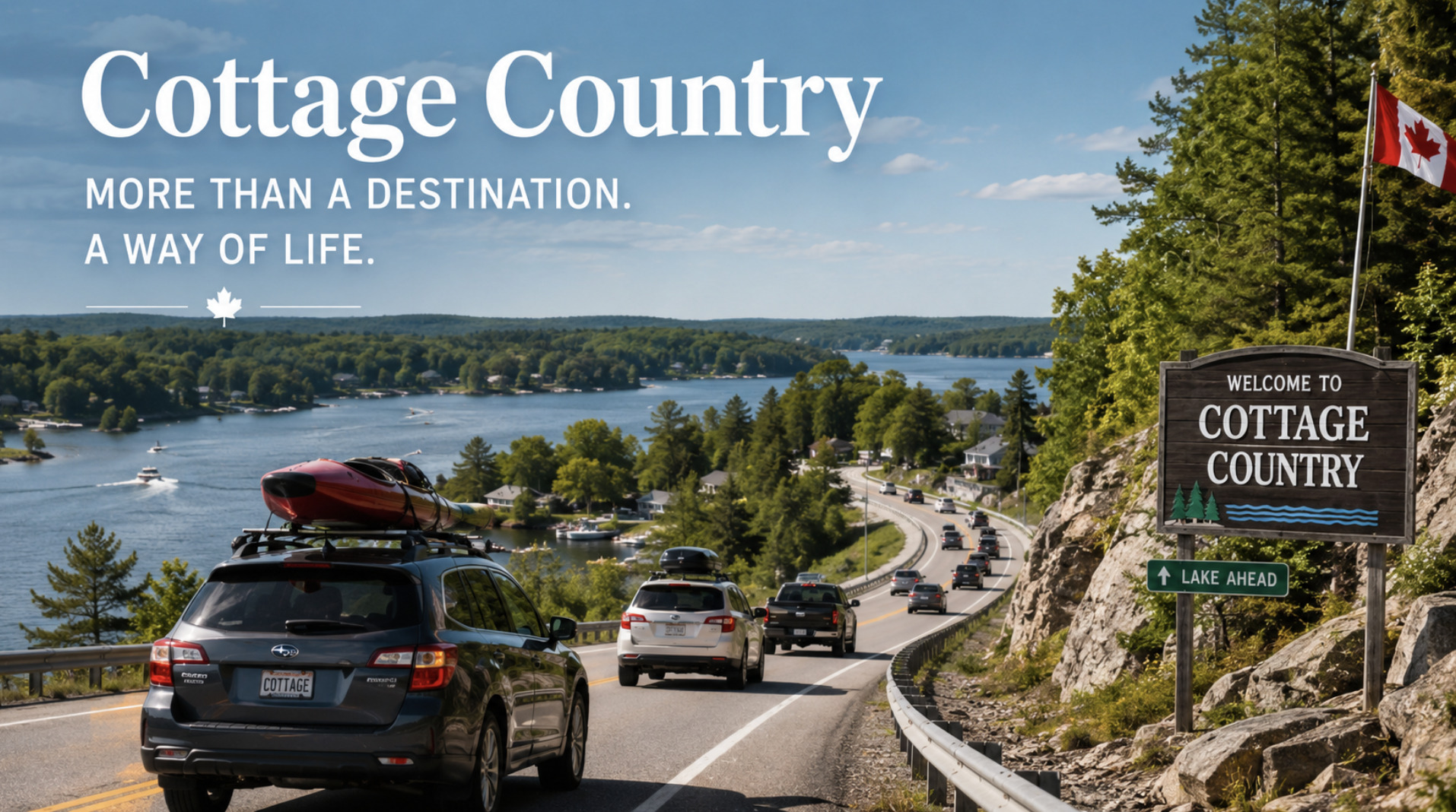
Come the first warm weekend of summer, a familiar migration begins. Highways out of Canada's cities fill with cars, roof racks loaded with kayaks and coolers, all pointed the same direction — north, toward the lake. The destination is a place more felt than mapped, known simply as cottage country, and the pull it exerts on Canadian life is remarkable for how deeply it runs. For a country defined partly by its long, hard winters, the summer weekend at the cottage is close to a national ritual, a shared idea of what rest and belonging look like. It is worth understanding what the tradition actually is, why it holds such a grip, and how to enjoy it well.
What cottage country actually is
Cottage country is less a specific location than a category of place: the lake-dotted, forested regions within a few hours' drive of Canada's major cities, where families keep — or rent — a modest second home by the water. In Ontario it spreads across the lakes north of Toronto; in Quebec it climbs into the Laurentians; across the country the particulars change but the essence does not. It is somewhere with a lake, some trees, a dock, and enough distance from the city to feel like another world without demanding a plane.
The defining feature is not luxury but simplicity. The classic cottage is deliberately unfussy — a place to swim, paddle, sit by a fire and do very little, where the point is precisely the absence of the things that fill a city week. That modesty is central to the appeal rather than incidental to it. Cottage country is the antidote to urban density and schedule, and its plainness is the whole design: a setting stripped back to water, woods and time, where a family can simply be somewhere quiet together.
Why the ritual runs so deep
The hold cottage country has on Canadians makes more sense once you set it against the rhythm of the Canadian year. This is a country of long, dark, demanding winters, and that context transforms summer from a pleasant season into something closer to a release. The short window of warmth is precious in a way it simply is not in milder climates, and the cottage weekend is how many Canadians choose to spend the most valuable weeks of their year — outdoors, on the water, making the most of light and heat that will not last.
There is a second layer beneath the seasonal one, and it is about belonging. For many families the cottage is a place returned to across generations, its dock and shoreline layered with decades of memory, so that going up north is not only a holiday but a homecoming to a piece of family history. The ritual carries continuity — the same lake, the same swim, the same faces around the same fire, year after year. That blend of seasonal urgency and deep familial attachment is why the cottage weekend is not merely popular but almost sacred in Canadian life, part of the same rooted sense of place we touched on in writing about why hockey still defines the Canadian winter. Summer at the lake is the warm-weather counterpart to that winter identity.
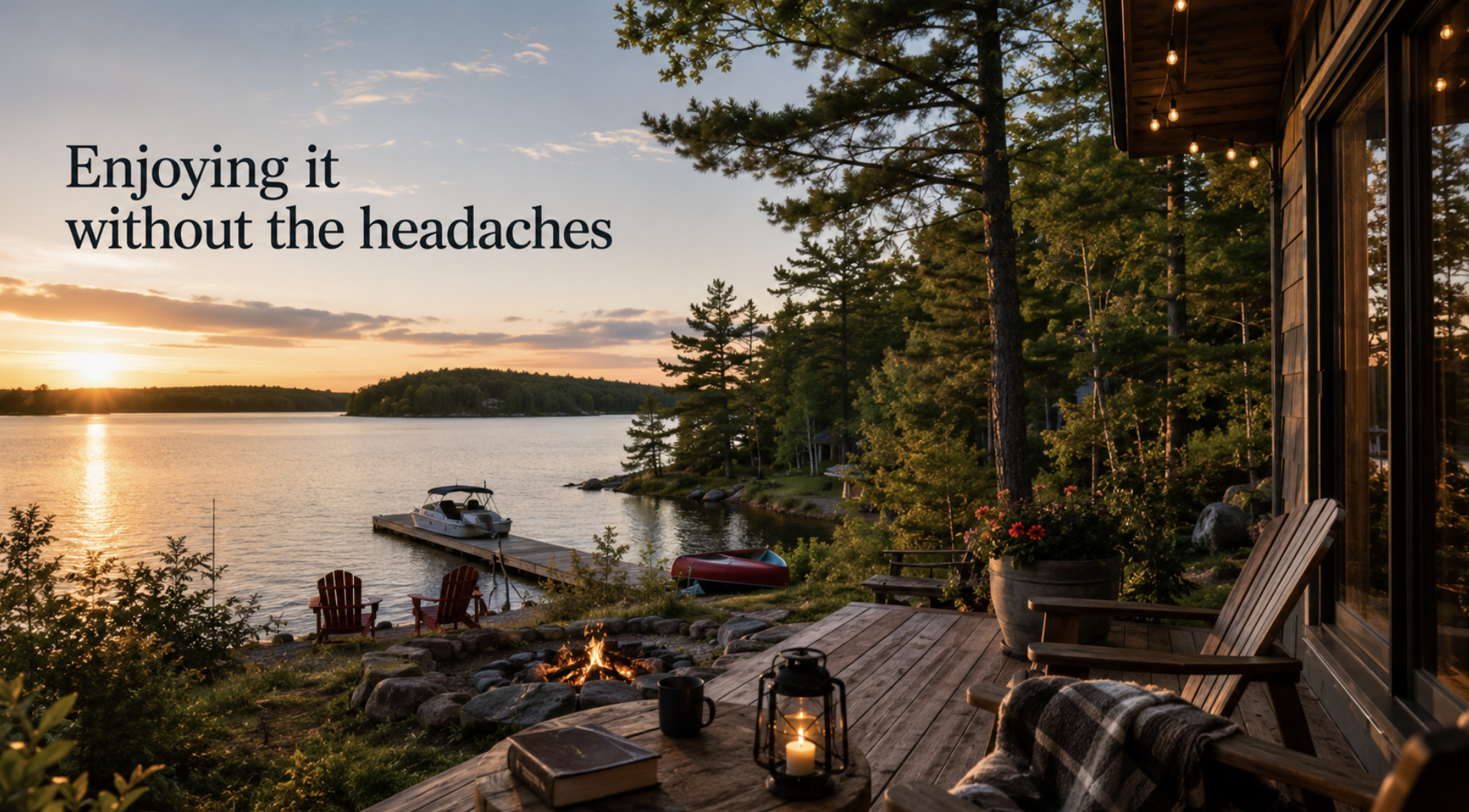
Enjoying it without the headaches
For all its idyllic reputation, the cottage weekend has its well-known frustrations, and knowing them is half of enjoying it. The most notorious is the drive. Because so many people leave the city at the same moment — Friday evening, Sunday afternoon — the highways north become slow-moving rivers of traffic, and a trip that should take two hours can swell to four or five. The single most effective fix is timing: travelling at off-peak hours, leaving very early or later than the crowd, avoids the worst of it and turns the journey back into part of the pleasure rather than a trial.
A few other simple habits smooth the rest. Because cottages are, by design, away from things, arriving well stocked with food and supplies saves repeated trips to distant and often pricey small-town stores. A little preparation for the outdoors — sun protection, bug precautions, a check of the weather — heads off the small discomforts that can nag at a lakeside weekend. And perhaps the most valuable adjustment is one of mindset: leaning into the slowness rather than fighting it, letting the point of the place be the doing of very little. The cottage rewards those who surrender to its pace and mildly frustrates those who try to pack it with activity. Come stocked, travel off-peak, and let the weekend be quiet, and the tradition delivers exactly what it promises.
A national idea of rest
What makes cottage country worth writing about is that it is more than a travel destination — it is a shared Canadian idea of what rest should feel like. In a fast, connected, urban age, the enduring appeal of a simple place by a lake, reached by a long drive, cherished across generations, says something about what people are actually looking for when they get the chance to stop. It is not spectacle or luxury but quiet, water, and continuity, and the fact that so many Canadians want the same modest thing each summer is itself a kind of cultural statement.
The migration north will happen again next summer, as it has for generations, highways clogging and docks filling and fires being lit at the water's edge. For anyone who has never understood the fuss, the thing to grasp is that cottage country is not really about the cottage. It is about a way of being — unhurried, outdoors, together, and briefly free of the week — that Canadians have collectively decided is worth a long drive and a short season to reach. That is the enduring pull, and it shows no sign of loosening.
Frequently asked questions
What is cottage country in Canada? It is a category of place rather than a single location: the lake-filled, forested regions within a few hours' drive of Canada's major cities, where families keep or rent a modest second home by the water. The essence is a lake, some trees, a dock, and enough distance from the city to feel like an escape.
Why is the cottage so important in Canadian culture? Because Canada's long, hard winters make the short summer especially precious, and the cottage weekend is how many spend the most valued weeks of the year. For many families the cottage is also returned to across generations, making the trip a homecoming layered with decades of memory as much as a holiday.
How do you avoid the worst of cottage-country traffic? Time your travel to miss the crowd. Because so many people leave the city at the same moments — Friday evening and Sunday afternoon — travelling at off-peak hours, very early or later than the rush, avoids the worst congestion and makes the drive far more pleasant.

Ethan Walker
Urban Mobility & City Culture Analyst
Ethan is deeply interested in how cities evolve through mobility, public space, and human behavior. He specializes in urban cycling ecosystems, infrastructure planning, and the cultural impact of transport systems on modern cities. His work focuses on the intersection of mobility, sustainability, and lifestyle, translating complex urban dynamics into accessible narratives for readers.
Advertise With Toronto Union 24
Reach over 500,000 engaged Canadian readers monthly. Premium placements available for Q2 2026.
Learn More Liam Carter
  Daniel Hughes