
Downtown Toronto rooftop fire what caused it and what it reveals
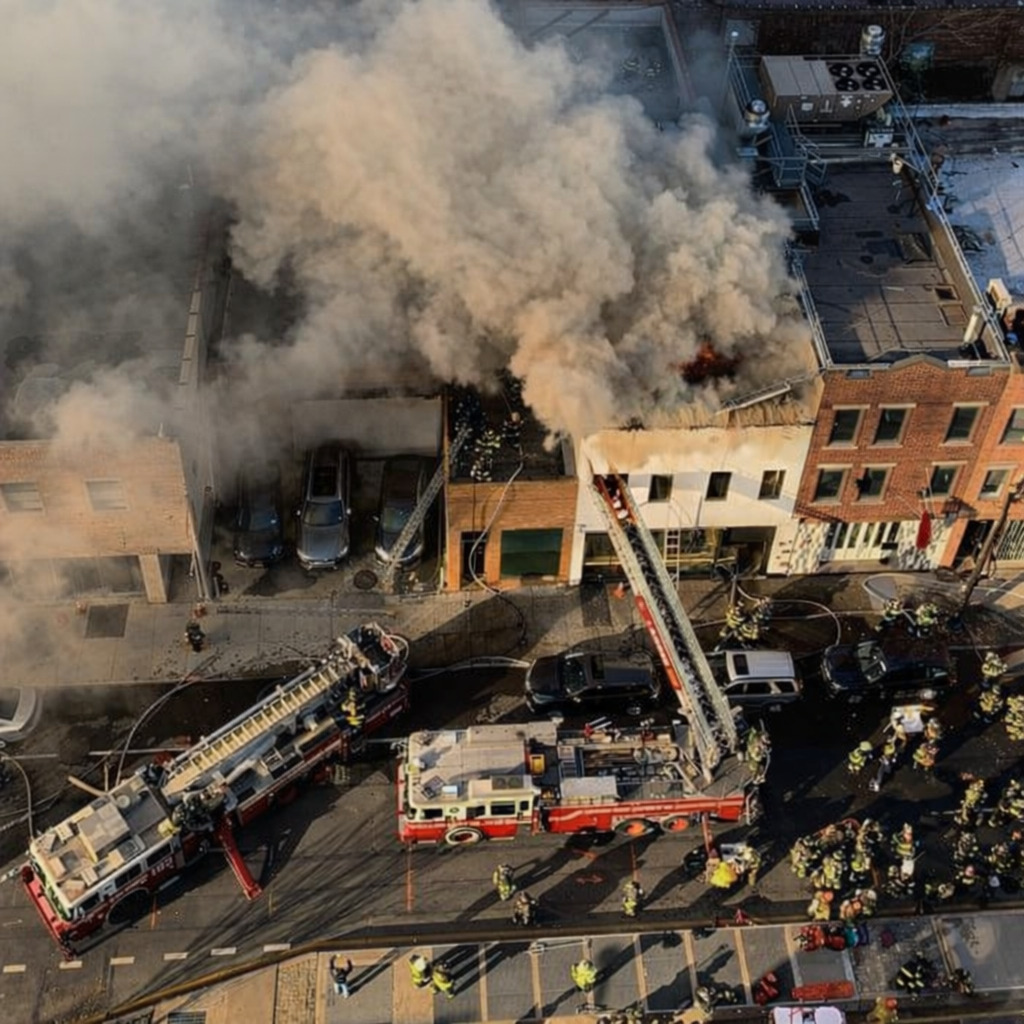
The fire that broke out on the roof of a downtown Toronto building is not simply another isolated emergency in a large city. It is a moment that reveals how modern urban systems operate under pressure — and where they fail.
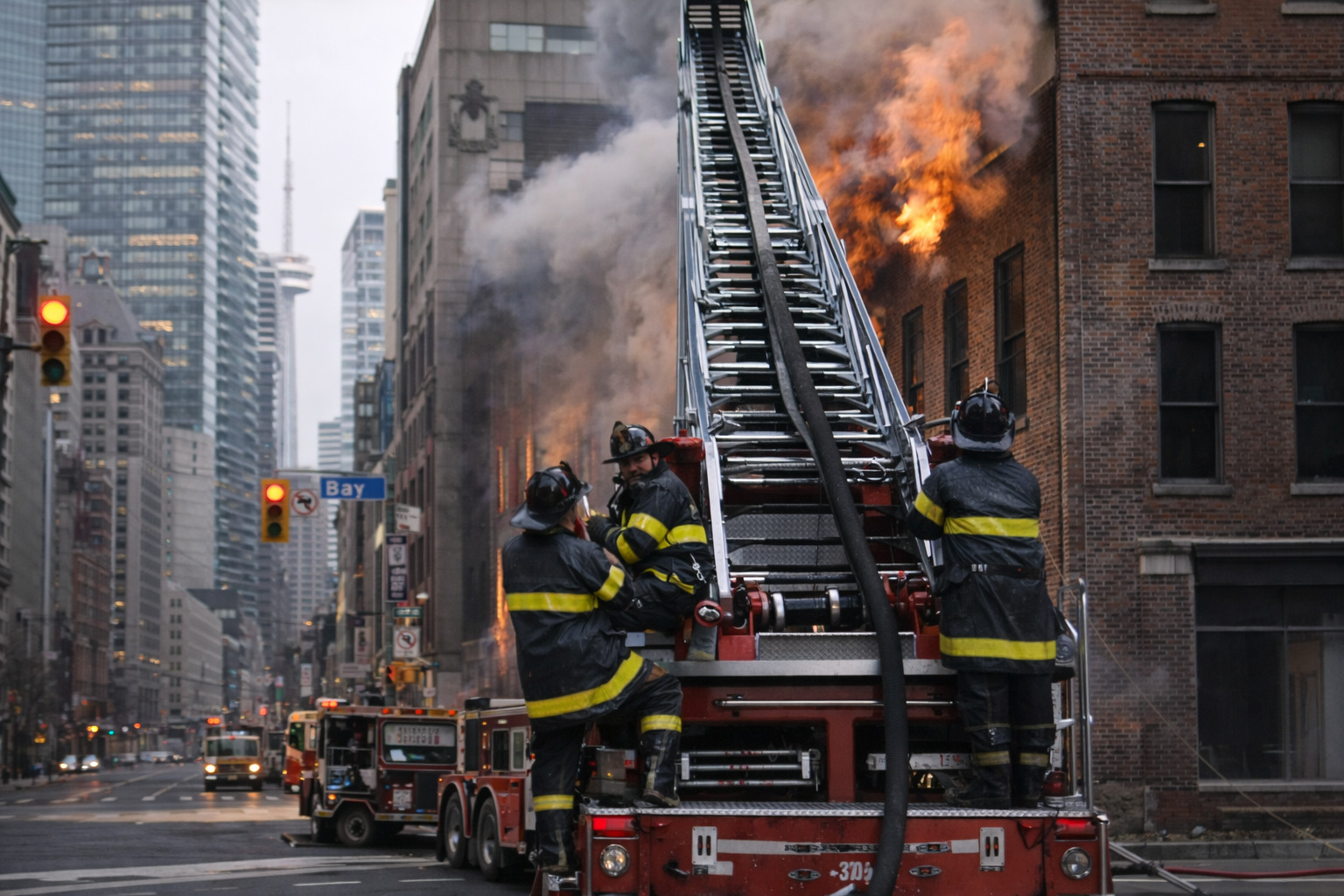
The fire that broke out on the roof of a downtown Toronto building is not simply another isolated emergency in a large city. It is a moment that reveals how modern urban systems operate under pressure — and where they fail.
At the surface level, the incident appears contained. Fire crews responded, the blaze was brought under control, and no large-scale catastrophe unfolded. But events like this are rarely about the visible outcome. They are about the conditions that made the fire possible in the first place.
Rooftop fires occupy a unique category of urban risk. Unlike fires inside enclosed spaces, they are exposed to wind, open airflow, and often to unfinished infrastructure. This combination makes them unpredictable and difficult to suppress quickly. In dense downtown environments, where buildings are tightly packed and vertical space is heavily utilized, even a localized fire has the potential to escalate beyond its origin point.
What makes this case more significant is the likely context in which it occurred. Early indications suggest the building was undergoing some form of work or technical modification. Construction and maintenance phases are among the most vulnerable moments in a building’s lifecycle. Systems are partially active, safety layers are incomplete, and temporary solutions often replace permanent ones. In such environments, risk is not an anomaly — it is built into the process.
This raises the question of responsibility, but not in a simplistic sense. Incidents like this are rarely the result of a single failure. They emerge from overlapping layers: technical systems that may not perform as expected, operational decisions that prioritize speed or efficiency, and regulatory frameworks that may not fully anticipate evolving construction practices. Responsibility, therefore, becomes diffuse. It exists across a chain rather than at a single point.
The scale of the emergency response itself reflects how seriously such incidents are treated. Fires in high-density areas trigger rapid escalation protocols, often mobilizing multiple units within minutes. This is not only about extinguishing flames, but about preventing secondary consequences — smoke infiltration, structural compromise, or spread to adjacent buildings. The presence of significant resources on site is not an indication of panic, but of how quickly a situation like this can shift from controlled to critical.
From a broader perspective, the incident aligns with a pattern seen in many global cities. As urban environments become more complex, the margin for error narrows. Buildings integrate more advanced systems, construction cycles accelerate, and infrastructure becomes more interconnected. These developments increase efficiency, but they also create new points of vulnerability. A single disruption can have disproportionate effects.
There is also a temporal dimension to consider. Cities like Toronto are in a constant state of transformation. New developments, retrofits, and upgrades are not occasional events — they are continuous. This means that at any given moment, a significant portion of the urban landscape exists in a transitional state. And transition, by definition, is where systems are least stable.
In that context, the fire is less an accident and more an exposure. It highlights how risk is distributed across modern infrastructure and how it can surface suddenly when multiple conditions align. It also challenges the assumption that advanced cities are inherently safer. In reality, they are often more dependent on precise coordination, and therefore more sensitive to disruption.
As one fire safety expert has noted, “Incidents do not create weaknesses — they reveal them.” This perspective shifts the focus away from the event itself and toward the system that allowed it to occur. The question is no longer what happened, but what conditions made it possible.
The outcome of this particular fire may not be severe, but its implications extend beyond a single building. It serves as a reminder that urban safety is not defined by response speed alone. It is defined by how effectively risk is anticipated, managed, and embedded into every stage of development.
The real issue is not whether the fire was contained. It is whether the environment in which it emerged has already normalized the kind of conditions that make such incidents increasingly likely.

Daniel Hughes
Sustainability & Policy Correspondent
Daniel is interested in how environmental policy translates into real urban change. He specializes in sustainable mobility, climate-focused city planning, and the political frameworks behind transport systems. His writing brings together data, policy analysis, and on-the-ground impact, offering a clear view of how sustainability initiatives affect everyday urban life.
Advertise With Toronto Union 24
Reach over 500,000 engaged Canadian readers monthly. Premium placements available for Q2 2026.
Learn More Liam Carter