
Royale With Influence: How Pulp Fiction Rewrote Pop Culture's Script
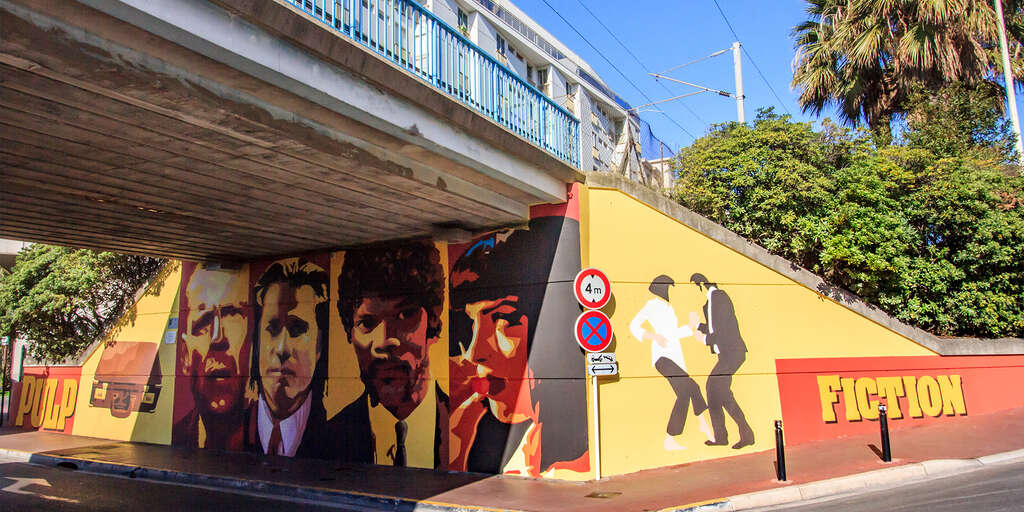
More than three decades after Vincent and Jules first debated the metric system over breakfast, Quentin Tarantino's second feature is still echoing through our music, our games, our memes — and the way we tell stories about ourselves.
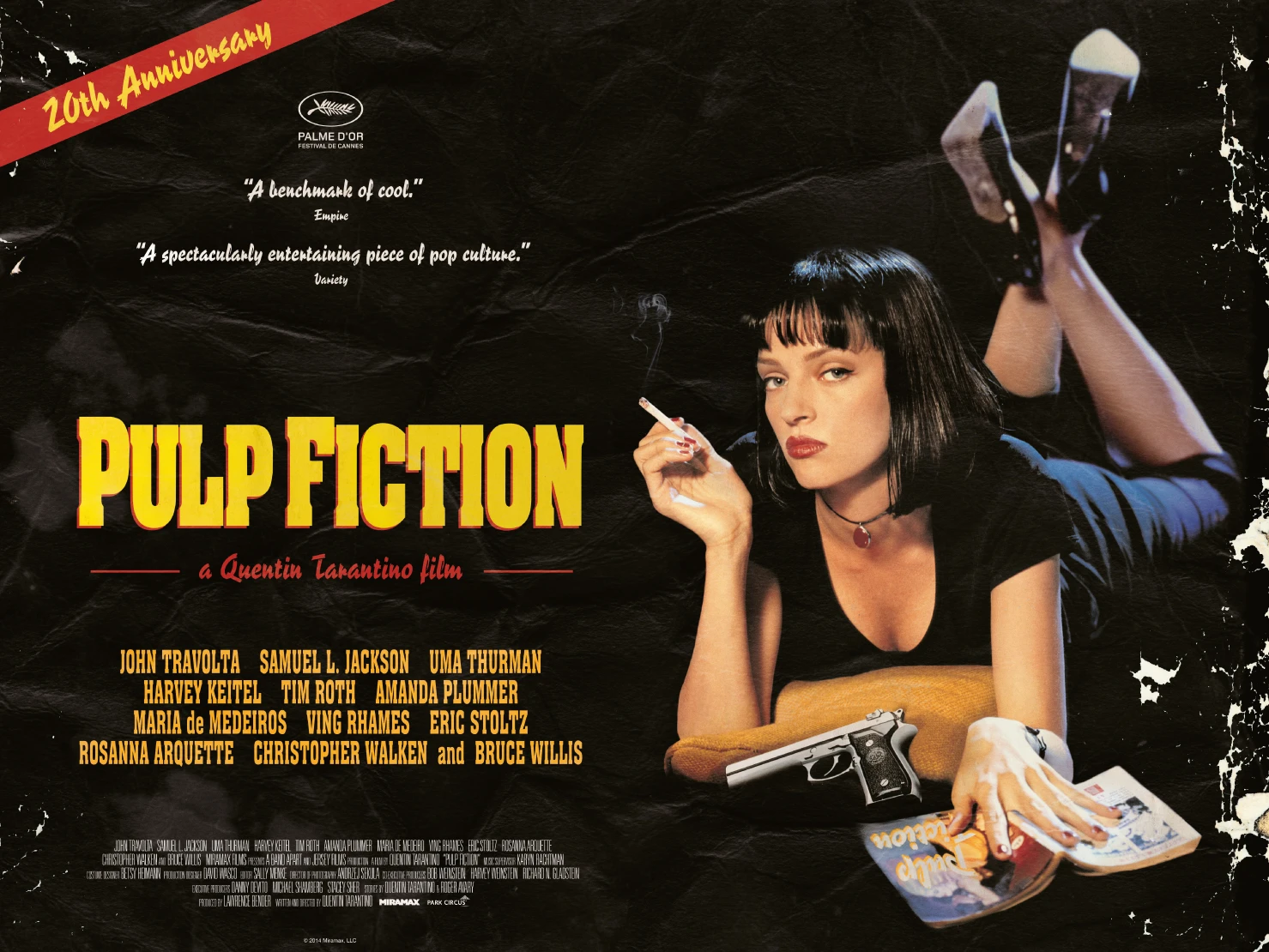
When Pulp Fiction premiered at Cannes in May 1994 and walked off with the Palme d'Or, even its most ardent supporters could not have predicted what was about to happen. A scrappy, non-linear crime film stitched together by an unknown writer-director from a video store in Manhattan Beach was about to become one of the most quoted, sampled, parodied, and outright stolen-from movies in modern history. It grossed more than US$200 million on a roughly US$8 million budget. It revived a stalled career (John Travolta's), launched several others, and dragged independent cinema squarely into the multiplex. But its real legacy isn't in box-office tallies. It's in the way it colonized everything around it.
To understand how thoroughly Pulp Fiction has shaped popular culture, you don't need to look at the film itself. You only need to look at what came after.
The Soundtrack That Changed Soundtracks
Before 1994, a movie soundtrack was largely a marketing afterthought — a place to park the radio single your studio paid for. Pulp Fiction dismantled that idea in about two hours. Tarantino, famously, doesn't use a composer. He curates. The opening blast of Dick Dale's "Misirlou" turned a 1962 surf instrumental into the sound of cool. Urge Overkill's cover of Neil Diamond's "Girl, You'll Be a Woman Soon" played behind one of the decade's most parodied scenes. Chuck Berry's "You Never Can Tell" gave John Travolta and Uma Thurman a twist contest that has been homaged in everything from kids' cartoons to car commercials.
The soundtrack album sold more than three million copies in North America. More importantly, it taught Hollywood — and the music industry — a new trick. The film-as-mixtape model that Guardians of the Galaxy would later turn into a billion-dollar franchise template starts here. So does the practice of using a needle-drop to resurrect a song rather than introduce one. Streaming-era playlists built around "songs from movies" owe a quiet debt to the moment Tarantino dropped the needle on Dale's reverb-soaked riff and made an entire generation Shazam a tune they had never heard.
Surf rock had a brief commercial second life because of it. Dick Dale, then in his fifties, toured to packed houses for the rest of his career. That kind of reach — a single film resuscitating an entire micro-genre — is rare, and it set the template for how hip prestige films would treat their music for decades.
A Permanent Tenant in the Video Game World
Walk into almost any narrative-driven crime game from the last twenty-five years and you'll find Vincent and Jules' fingerprints on the wall. Grand Theft Auto, particularly from Vice City onward, lifts Tarantino's tonal cocktail almost wholesale: criminals having mundane conversations, abrupt violence, jukebox-curated radio stations, and a worldview where the soundtrack is its own character. Hitman: Blood Money, Max Payne, Mafia, Kane & Lynch — the long shadow is unmistakable.
There's also the direct homage industry. No One Lives Forever references the dance scene. The Darkness II features a chapter that quotes Marsellus Wallace's basement scene in tone if not in detail. Indie games like Ben There, Dan That! and Knights of the Old Republic II sneak in nods. The Travolta "confused man" GIF has become one of the most-used reaction images in gaming forums and Twitch chats on the planet — a 1994 piece of physical comedy that lives, ageless, in 2026 Discord servers.
More structurally, Pulp Fiction helped legitimize non-linear storytelling in interactive media. Games such as Heavy Rain, Virginia, Twelve Minutes, and Telling Lies assume an audience comfortable with shuffled chronology. That comfort was built, in large part, on a generation that had already been trained by Pulp Fiction, Memento, and the wave of fractured narratives the film made commercially viable.
The Tarantinoesque Sentence
Try this: name a prestige cable drama from the last twenty-five years that doesn't, somewhere, contain two characters with guns having a long conversation about something completely unrelated to the scene's stakes. The Sopranos, Breaking Bad, Better Call Saul, Fargo, Barry, The Bear — the entire post-1999 golden age of television runs partly on a stylistic loan from one diner conversation about foot massages. Critics coined the adjective Tarantinoesque almost immediately, and lazy imitators turned it into a punchline within five years, but the underlying technique — let your characters be people first and plot devices second — became gospel.
Canadian filmmakers absorbed it as readily as anyone. Bruce McDonald's later work, the early Vincenzo Natali features, much of the post-2000 Toronto indie scene — all of them are working in a register that Pulp Fiction helped legitimize for English-language film outside the studio system.
Online Casinos and the Tarantino Aesthetic
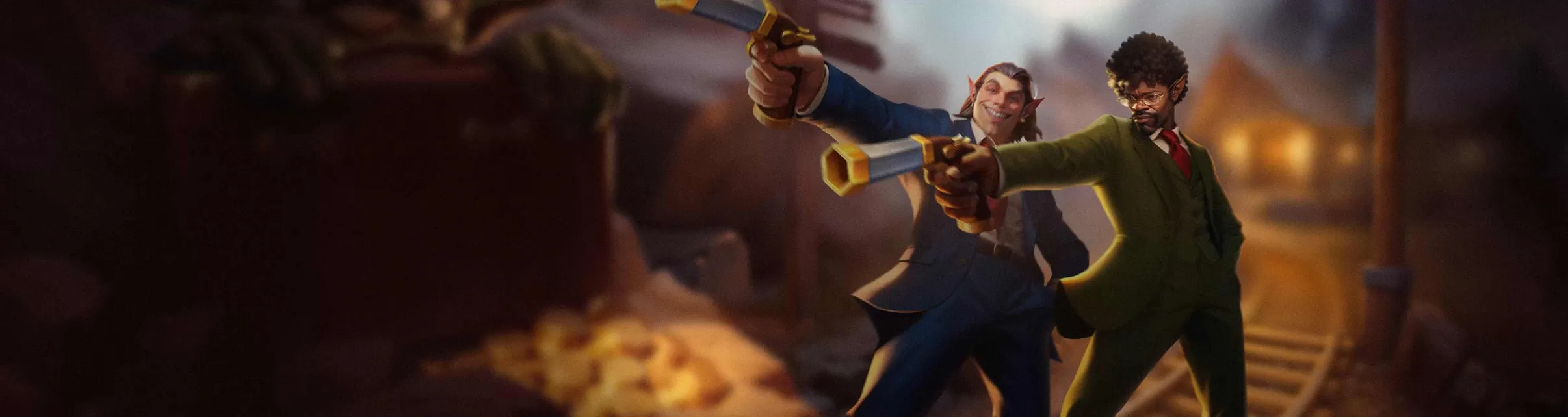
If Pulp Fiction once colonized soundtracks and screenwriting, it has now found an unlikely but fitting home in the design language of online casinos. In an industry built on atmosphere and immersion, Tarantino’s signature blend of retro cool, sharp dialogue energy, and stylized danger translates almost perfectly into digital gambling spaces. Neon-lit interfaces, pulp-style typography, and character-driven visuals echo the film’s universe — turning a simple login screen into something closer to stepping into Jack Rabbit Slim’s.
One of the clearest examples is Wintino Casino, where the influence isn’t subtle — it’s foundational. The platform leans heavily into Pulp Fiction-inspired aesthetics: bold color contrasts, vintage Americana motifs, and a visual rhythm that feels lifted straight from a Tarantino frame. Even the pacing of the user experience — quick cuts between games, punchy animations, and curated sound cues — mirrors the film’s kinetic storytelling style.
More broadly, the adoption of cinematic themes in online casinos reflects a shift in how these platforms engage users. It’s no longer just about spinning reels; it’s about inhabiting a mood. And Tarantino’s world — cool, ironic, slightly dangerous, and endlessly quotable — offers a ready-made blueprint. In that sense, Pulp Fiction continues to do what it has always done best: slip into new cultural spaces, take them over quietly, and leave behind a style that feels instantly iconic.
Fashion, Memes, and the Long Tail
Mia Wallace's blunt black bob has been on Halloween costume racks every October for thirty straight years. The white-shirt-and-skinny-black-tie uniform Vincent and Jules wear has become shorthand for "stylish hitman" so universally that Reservoir Dogs now gets blamed for it instead. The dance pose has been recreated by everyone from Audrey Tautou and Hugh Laurie to Travolta himself in a Super Bowl commercial.
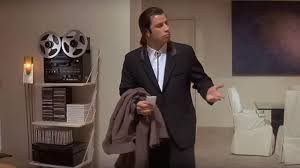
And then there are the memes. The shrugging Vincent. The "English, motherf—er, do you speak it?" reaction shot. The briefcase glow, which has been parodied in The Simpsons, Family Guy, Rick and Morty, Robot Chicken, and approximately every YouTube sketch channel ever uploaded. Pulp Fiction did not invent the cinematic reaction GIF, but more of its frames have escaped the film and gone feral on the internet than almost any movie of its era.
Why It Stuck
What's curious about all of this is that Pulp Fiction wasn't, in 1994, doing anything strictly new. Non-linear narrative existed. Crime films with talky digressions existed. Eclectic soundtracks existed. What Tarantino did was concentrate every one of these elements into a single, gleefully unembarrassed package, package it with a soundtrack you could buy at HMV the next day, and trust audiences to keep up. They did. They have not stopped keeping up since.
Three decades on, every time a streaming series opens with a 1970s funk track over a slow tracking shot, every time a video game cuts away from the action so two henchmen can debate something trivial, every time a meme account posts the Travolta shrug — the film is doing its quiet, persistent work. Pulp Fiction didn't just influence pop culture. It's still, in 2026, one of pop culture's permanent operating instructions.

Daniel Hughes
Sustainability & Policy Correspondent
Daniel is interested in how environmental policy translates into real urban change. He specializes in sustainable mobility, climate-focused city planning, and the political frameworks behind transport systems. His writing brings together data, policy analysis, and on-the-ground impact, offering a clear view of how sustainability initiatives affect everyday urban life.
Advertise With Toronto Union 24
Reach over 500,000 engaged Canadian readers monthly. Premium placements available for Q2 2026.
Learn More Aila Kenuak
  Noah Bennett
  Ethan Walker