
Carney Just Made the Most Concrete Bet Yet on the End of the American Defence Era — and Bombardier Was the Reason
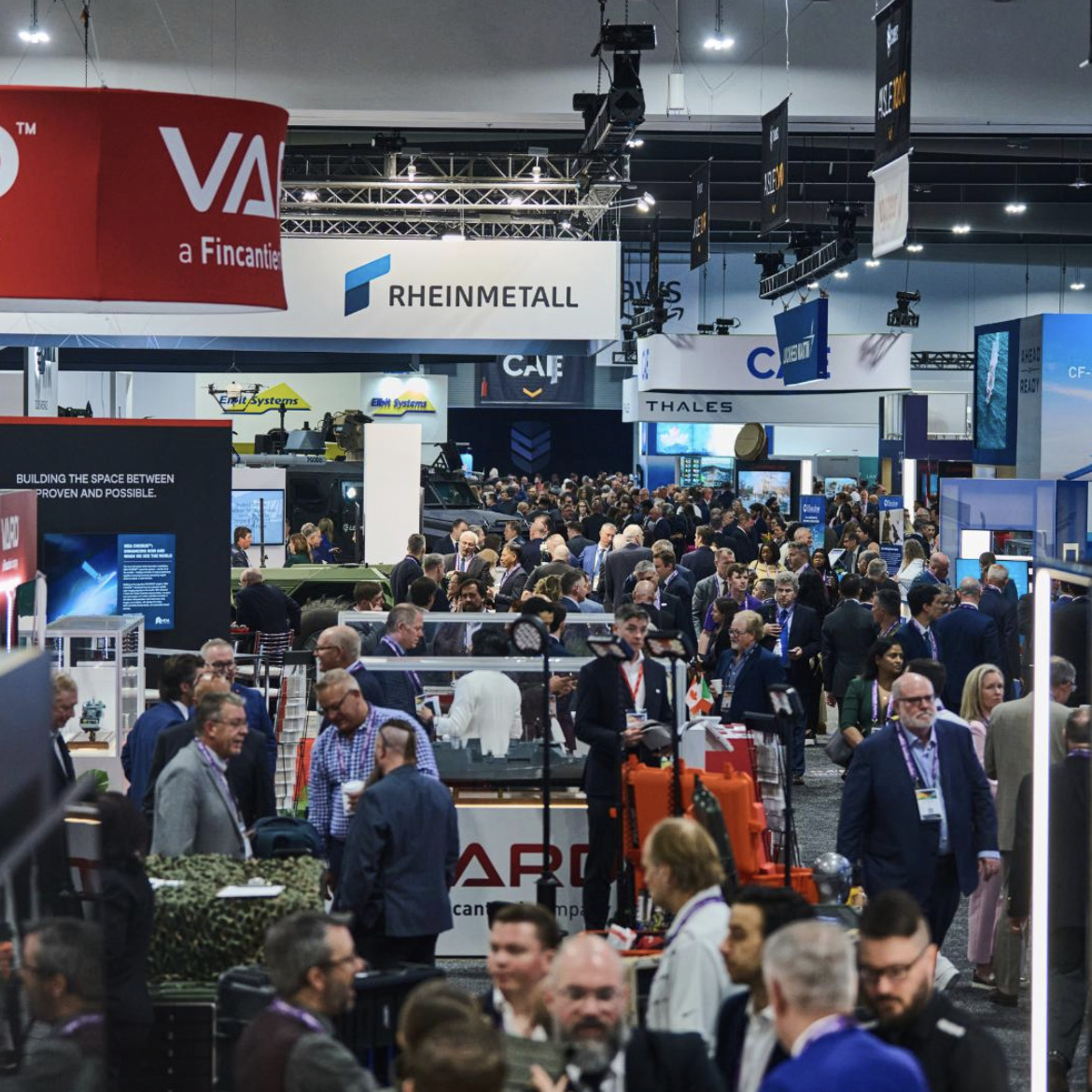
On Wednesday morning at CANSEC, the largest defence and security trade show in Canada, Mark Carney did something no Canadian prime minister had done before. He showed up to it. The optics alone were the point of half the speech. What he announced from the stage was the other half: Canada has entered formal negotiations with Sweden's Saab to procure the GlobalEye airborne early-warning and control aircraft, selecting the Swedish system over two American competitors for what will be one of the country's most consequential military purchases of the decade.
Procurement decisions of this size are rarely interesting on their own. This one is, because the case for it that Carney's government chose to make in public is not principally a defence case. It is an industrial-policy case wearing a defence uniform — and read closely, it is the first time the Carney doctrine on the trade war has been written down in dollars and aircraft rather than in adjectives.
What the announcement actually does
The mechanics first. Saab has been selected as Canada's "preferred supplier" for its Airborne Early Warning and Control (AEW&C) capability, which means negotiations have begun but no contract has been signed. The system in question — Saab's GlobalEye — is built on the Bombardier Global 6500 platform, an executive jet manufactured in Canada and retrofitted with a Saab radar suite that can track objects up to several hundred kilometres away across air, sea and land in real time. The federal government has previously indicated it intends to buy six of these aircraft, at an estimated cost of more than five billion Canadian dollars.
The competing offers came from American manufacturers, with Boeing's E-7 in the strongest position before Wednesday. Canada chose the Swedish-Canadian option instead. That is the headline. The interesting part is the structure of the deal Canada says it is now pursuing.
The structure is the policy
According to the government, the partnership is projected to support more than three thousand jobs in Canadian aerospace and defence, and at least one third of the projected GlobalEye fleet built worldwide over the next fifteen years will be manufactured in Canada — a commitment described as covering at least forty aircraft, including future orders from allied nations. Bombardier's spokesperson acknowledged on Wednesday that the company may need to expand a facility, or open a new one, to handle the work. A separate Saab-CAE agreement covers training and simulation. A Saab partnership with the Canadian AI company Cohere is also in the background.
This is not how Canada has historically procured major defence platforms. The default for most of the past forty years has been to buy American hardware, often pre-built, with Canadian industrial offsets attached as a sweetener. What the GlobalEye deal does — if it lands as advertised — is invert that logic. Canada is buying a Swedish capability that is already built on a Canadian airframe, with a Canadian assembly commitment, in a deal designed from the start to grow domestic aerospace capacity rather than merely consume it. The fleet is projected to include exports manufactured in Canada for other countries; the airframe is one Bombardier already makes.
Strip away the diplomatic language and the proposition is straightforward. The Canadian government has decided that the question "where is this jet built?" is now as important to a procurement decision as the question "what does it do?" And in this case it has answered the first question with: by us.
The trade-war subtext nobody is hiding
The reason this matters is the context the announcement was carefully designed not to spell out too loudly but to leave entirely visible. The decision was made in the middle of an ongoing North American trade conflict in which the United States has applied tariffs to most Canadian imports and reviews of Canadian access to American markets are pending. The defence relationship has not been formally caught up in that conflict, but the procurement reflex it shaped — buy American because the American supplier is the path of least resistance — has become, in 2026, a path of measurable resistance.
Carney's office described Wednesday's decision in language that did the work without saying the quiet part. The partnership, the statement said, "builds Canadian strategic autonomy, creates Canadian jobs and reinforces Canada's position as a global leader." Strategic autonomy is the operative phrase. It is also the phrase that ties this announcement to the parallel review of the F-35 purchase that Carney's government has been signalling for months, which is being driven by the same logic — the search for an option that puts more production on Canadian soil. Saab has been quietly pitching the same model with its Gripen fighter for over a year. Wednesday's announcement was, among other things, a public signal that the bid is being taken seriously.
What this commits Canada to, and what it doesn't
A few cautions belong in the picture. No contract has been signed. The term "preferred supplier" gives both sides room to walk; large defence negotiations frequently shift in scope, schedule and price between the announcement and the delivery. The five-billion-plus dollar figure cited by Canada's Department of National Defence is an early estimate, and procurement programs of this complexity have a long history of moving in only one direction.
The industrial commitments — forty aircraft built in Canada, three thousand jobs — depend on those negotiations concluding and, importantly, on Saab winning enough additional orders globally to fill the projected fleet. European outlets have reported that the NATO Support and Procurement Agency has selected the joint Saab-Bombardier system to replace fourteen ageing Boeing E-3A Sentries, which if confirmed would itself meaningfully expand the production base. France, Sweden and the United Arab Emirates have previously bought GlobalEye in some form. The Canadian industrial case rests on those orders being real and growing.
What the announcement does commit to, even before any contract is signed, is a direction. The Carney government has been speaking in general terms about reducing Canada's dependence on US defence procurement for over a year. This is the first time it has assigned a major dollar figure to that direction, in public, with a foreign prime minister welcoming the decision in real time. Sweden's Ulf Kristersson said on Wednesday that the GlobalEye choice ties the two countries closer together. He was correct. The reverse implication — about which country Canada is now standing slightly further from on questions of strategic supply — is the half of the sentence neither government needed to finish.
The Arctic, NORAD, and the operational case
Beneath the industrial and political layers, there is a genuine defence rationale that the government is right to emphasize. Canada's existing fleet of Aurora maritime patrol aircraft, built on a long-since-discontinued Lockheed platform, is being replaced separately. What it has lacked is a modern airborne early-warning capability for the kind of long-range, multi-domain surveillance that an Arctic-facing country with NORAD obligations actually needs.
The GlobalEye is designed for exactly that mission profile. Its long-range air-and-sea radar suite gives the Royal Canadian Air Force the kind of persistent surveillance picture that the current fleet cannot, particularly across the Arctic — a region in which Russian and, increasingly, Chinese activity has not been the subject of doubt for some time. The operational case is solid. It is also the easiest part of the announcement to defend, which is part of why it is the part that the government has chosen to lead with in its briefings.
What to watch over the next twelve months
Three things will tell you whether Wednesday's announcement becomes the doctrinal moment Carney has framed it as, or fades into the standard pattern of large procurements that slip.
Watch the contract. A signed agreement that preserves the one-third-of-fleet manufacturing commitment is the difference between a doctrine and a press release. If the final deal moves the production share down, or makes it contingent on conditions that can be quietly waived later, the strategic-autonomy framing will look more like rhetoric.
Watch the F-35 decision. The GlobalEye procurement and the F-35 review are being treated by Carney's office as the front and back end of the same argument. A decision to proceed with the F-35 purchase essentially as planned would suggest the doctrine has limits; a decision to pursue the Saab Gripen with the same Canadian-assembly structure would mean the doctrine is real, and would commit Canada to a defence-industrial relationship with Sweden that is much larger than a single aircraft type.
And watch the broader procurement pipeline. Canada has committed to roughly $180 billion in defence spending over the next decade and additional sums for defence-related infrastructure. The GlobalEye decision sets a template — Canadian-airframe-led, allied-partner-aligned, jobs-attached. Whether the next decision uses that template, or quietly reverts to type, is what will tell you what the trade war has actually changed about how Canada buys things.
For now, what happened on Wednesday is this. A Canadian prime minister stood at a defence trade show that had spent decades being a back-channel between Canadian buyers and American sellers, and chose a European supplier for a flagship capability because the European supplier had been willing, in the language of the announcement, to build it here. The procurement is real. The doctrine is now visible. Whether it survives contact with the next twelve months of negotiation is the only question left.

Liam Carter
Street Culture & Nightlife Journalist
Liam focuses on the cultural layer of urban life — music, street scenes, and the rhythm of cities after dark. He writes about how cycling, nightlife, and creative communities intersect, shaping new forms of social interaction and identity. His work has been featured in independent media platforms and urban culture publications, where he has covered festivals, underground scenes, and emerging city trends.
Advertise With Toronto Union 24
Reach over 500,000 engaged Canadian readers monthly. Premium placements available for Q2 2026.
Learn More Aila Kenuak