
Olivia Chow Finally Made It Official — Why She Waited Until the Eve of the World Cup to Confirm a Second-Term Bid
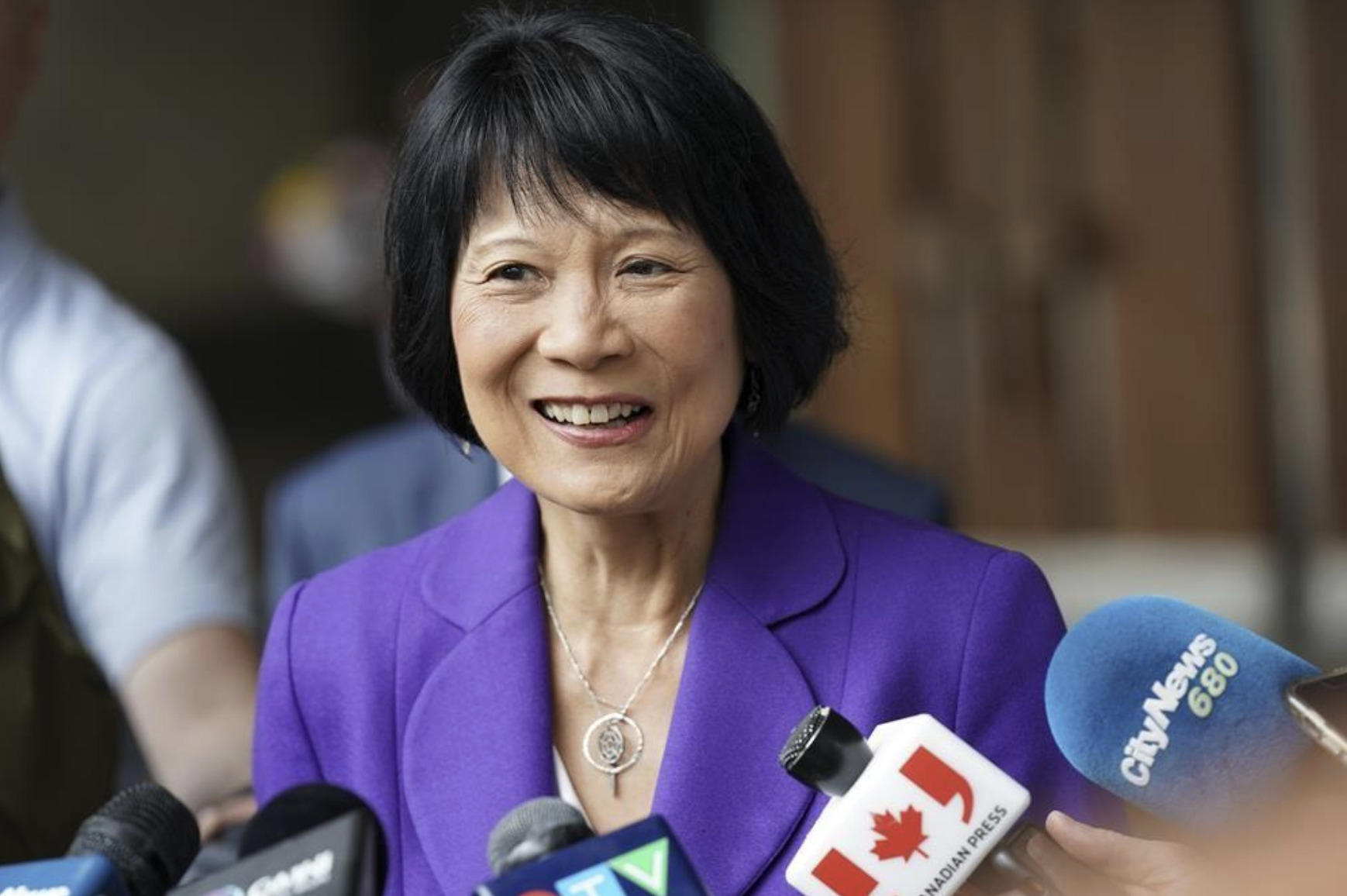
At ten in the morning on Monday, May 25, Toronto Mayor Olivia Chow walked into a news conference and ended months of carefully maintained ambiguity. She had registered, she said, to run for a second term. There were no policy announcements, no campaign launch event, no detailed platform — only a brief statement, a press release, and a line her communications team had clearly worked on. "I'm in your corner." A few hours later she was at Nathan Phillips Square for a FIFA World Cup Trophy Tour event, doing the job of being mayor. The order of those two appearances was not an accident.
For anyone watching Toronto City Hall over the past year, the question was never whether Chow would run. It was when she would say so, and the answer the 69-year-old former NDP parliamentarian eventually gave is one of the more revealing strategic choices of the cycle. Understanding why she waited tells you more about how this race is going to be fought than the announcement itself did.
A field of sixteen, and only one that matters
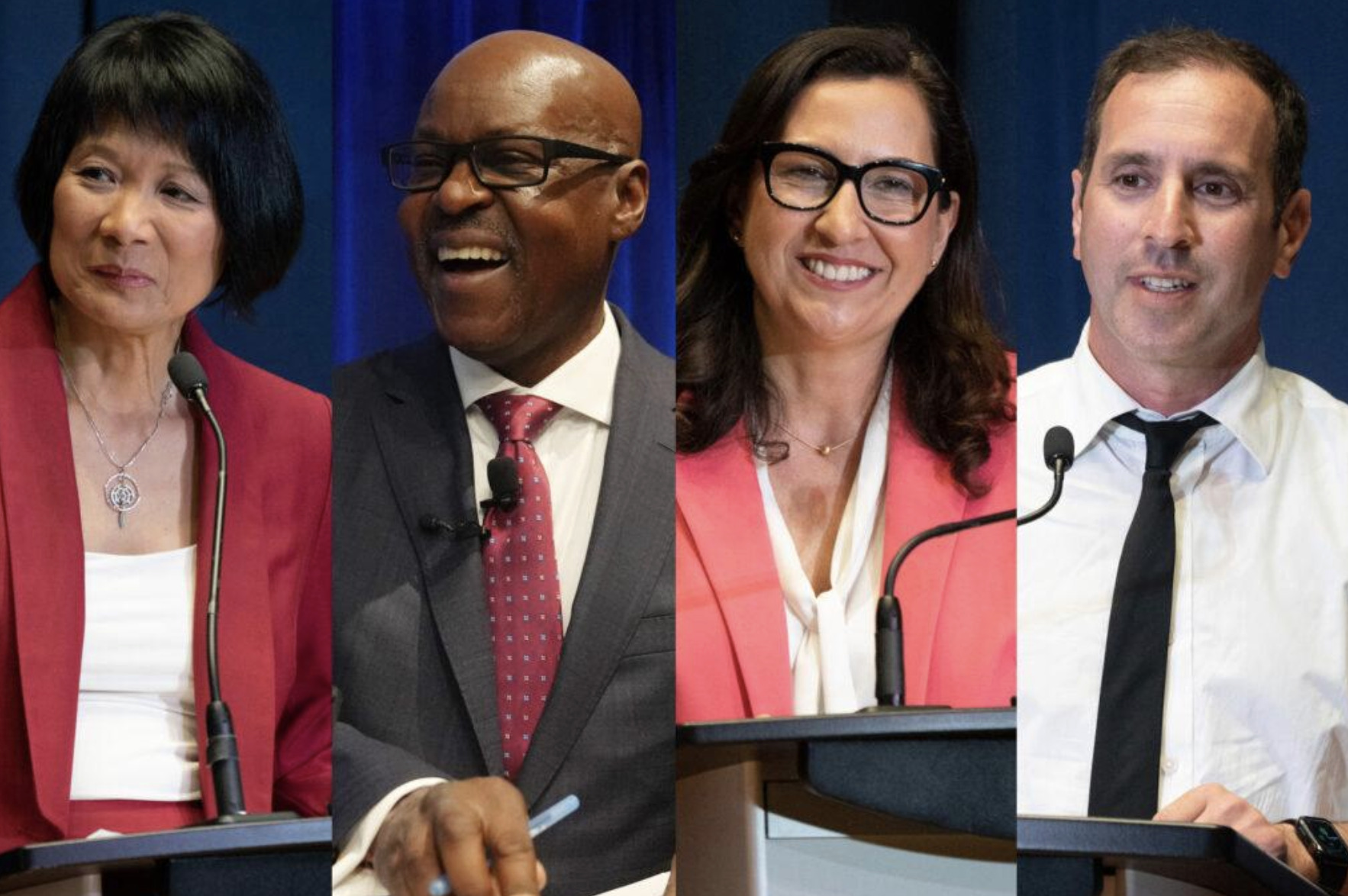
By the time Chow stepped up to the microphone, fifteen other candidates had already registered to be Toronto's mayor. The nomination window opened on May 1 and closes on August 21, and what looked like an empty stage three weeks ago is now genuinely crowded. Most of those names will not survive the summer. The one that already has, and that her team has been quietly preparing for since long before this week, is Brad Bradford.
The Ward 19 Beaches–East York councillor has been running, in everything but the formal sense, since the day he conceded the 2023 byelection that put Chow in office. He finished eighth in that crowded field — the same field Chow won with roughly 37 per cent of the vote — and spent the next three years building a different kind of campaign: a sustained, public critique aimed not at any one Chow decision but at the overall texture of her mayoralty. He entered the 2026 race officially on May 1, the moment nominations opened, and the contrast with the incumbent's silence has been the single most effective element of his operation so far.
That asymmetry is the context that explains Monday's announcement, and the part that the brief press release was designed to bury.
Why announce now, and not earlier, and not later
Chow's explanation for the timing was straightforward enough at the news conference: her team needs the runway to build out a campaign, and that runway is now short. There is plenty of time to campaign in the fall, she said, but the structure has to be put in place before then.
That is true, and it is also incomplete. The fuller answer is visible in two pieces of information her statement did not foreground.
The first is the World Cup. FIFA's tournament arrives in Toronto on June 11, two weeks from this writing, with the city as a host venue and a stage on which a mayor either looks competent or does not. Chow's team has telegraphed for months that they wanted the announcement done, but not louder than the event that will define the early summer. A campaign launched in late May, registered without a rally and immediately handed back to the work of being mayor, is one that does not compete with the World Cup for oxygen. A launch in April or June would have. The mayor gets to spend the next fortnight unveiling tournament infrastructure, standing next to the trophy, and benefiting from the kind of free, dignified incumbent imagery that no challenger can replicate. The campaign waits.
The second piece is the cost of waiting any longer. For the twenty-four days between Bradford's entry on May 1 and Chow's registration on Monday, the city's mayor was making frequent, well-staffed announcements — on housing, transit, public safety — that to a friendly eye looked like governance and to a less friendly eye looked indistinguishable from a campaign run on the public dime. Bradford was not a friendly eye. He said as much, in plain terms, on Monday: he was delighted, he said, that the mayor had finally recognized that campaigning on the public dime was wrong. The longer Chow stayed unregistered, the more that line had room to grow. Registering changes nothing legally about what a mayor can do in office, but it removes the specific rhetorical wedge of the incumbent campaigning while pretending not to. Monday was the latest she could afford to leave that wedge in Bradford's hands.
The argument she will run on
The press release laid out the early version of Chow's pitch, and it was notable mostly for what it included and what it did not. She touted four accomplishments: free meals for schoolchildren, frozen transit fares, longer library hours, and more crisis workers. The throughline is intentional — these are tangible, visible-to-the-voter expenditures of municipal authority that map onto a sentence anyone can finish. She made the bus cheaper. She kept the libraries open later. She fed the kids.
What the list does not contain is housing, which is the single largest substantive issue of the term and the one on which incumbency is hardest to defend. Toronto's rental market remains brutal, the supply problem remains structural, and a mayor's leverage over it is real but limited. Chow's team appears to have concluded — correctly — that the campaign cannot be won by litigating housing on the incumbent's record, and must instead be won by changing the question. "Affordable, caring and safe," the phrase the mayor used Monday, is a deliberate widening of the frame: it asks voters to evaluate the texture of life in the city, not just the price of a one-bedroom.
Bradford's framing is the inverse. He is running on crime, congestion, and affordability — three words designed to make the incumbent's tenure feel like managed decline. The election, in other words, is shaping up as a referendum on whether Toronto in 2026 feels like a city being held together by a competent mayor or one being slowly let go of by a mayor who has run out of ideas. Both descriptions can be made to fit the same evidence. Which one the electorate accepts is what October is for.
The fragmented-vote problem cuts both ways
There is one structural feature of Toronto mayoral elections that both campaigns will spend the summer trying to manage. Chow won in 2023 with a plurality, not a majority, because the field was crowded enough that 37 per cent was enough to come first. The same arithmetic is available in 2026, and it cuts in both directions: a crowded ballot helps the candidate with the strongest base and a recognizable name — typically the incumbent — but it also lowers the threshold a single insurgent needs to reach if the anti-incumbent vote consolidates behind them.
Bradford's strategic problem, then, is not Chow. It is the other fifteen names on the ballot. If he can become the obvious challenger by Labour Day, the math gets very interesting; if he is still one of three or four credible alternatives by early October, Chow wins comfortably regardless of her approval numbers. Expect the next four months to be, in part, a quiet competition among non-Chow candidates over who concedes the lane and who insists on running it.
What to actually watch
The announcement itself was modest by design, but the dynamics it sets up are not. Three things will tell you, over the summer, where this is heading.
Watch how Chow uses the World Cup. A mayor who is genuinely competent through a logistically complex global event — full stadiums, working transit, no high-profile failures — carries a kind of credibility into the fall that policy alone cannot manufacture. A mayor who is visibly out of her depth during it carries the opposite. The tournament is, in effect, an unscheduled six-week televised job interview.
Watch the housing announcements. Chow's team has signalled it wants to push more housing changes through before the campaign begins in earnest. Anything substantive that lands before September will be folded into the case for continuity; anything that stalls becomes part of the case for change.
And watch the rest of the field. The names beyond Chow and Bradford will start dropping or coalescing through the summer. The shape of the ballot in late August — not the speeches of late May — is the variable that will decide this.
For now, Chow has done the small, necessary thing she had been putting off. She has registered, given herself the legal standing to be a candidate, and then walked back into the job. The campaign she did not launch on Monday is the one she will run in the fall. The choice to hold it that way, with FIFA between now and then, is the most strategically interesting thing she has done in office in some time.
Aila Kenuak
My name is Aila Kenuak, a proud Indigenous writer from the rugged coastlines of Newfoundland and Labrador. I come from a community where stories are carried through generations—spoken, remembered, and deeply felt. My work is rooted in those traditions, shaped by the land, the ocean, and the resilience of our people.
To the readers of Toronto Union 24, I write with a commitment to truth, clarity, and connection. Whether covering breaking developments or long-form stories, I aim to bring voices forward that are too often overlooked. Canada is vast and diverse, and every story deserves to be told with respect and depth.
Thank you for reading, listening, and staying informed.
Advertise With Toronto Union 24
Reach over 500,000 engaged Canadian readers monthly. Premium placements available for Q2 2026.
Learn More Liam Carter