
Easter Canada 2026 food prices traditions and how people celebrate today

Easter used to be one of the last holidays where tradition quietly dictated the structure of the day. What you cooked, how you gathered, even how the table looked — much of it followed patterns that rarely changed. Lamb for some, ham for most, chocolate for everyone.
But in 2026, the meaning of Easter is expanding. Not disappearing — expanding. The table is still there, but what surrounds it is shifting.
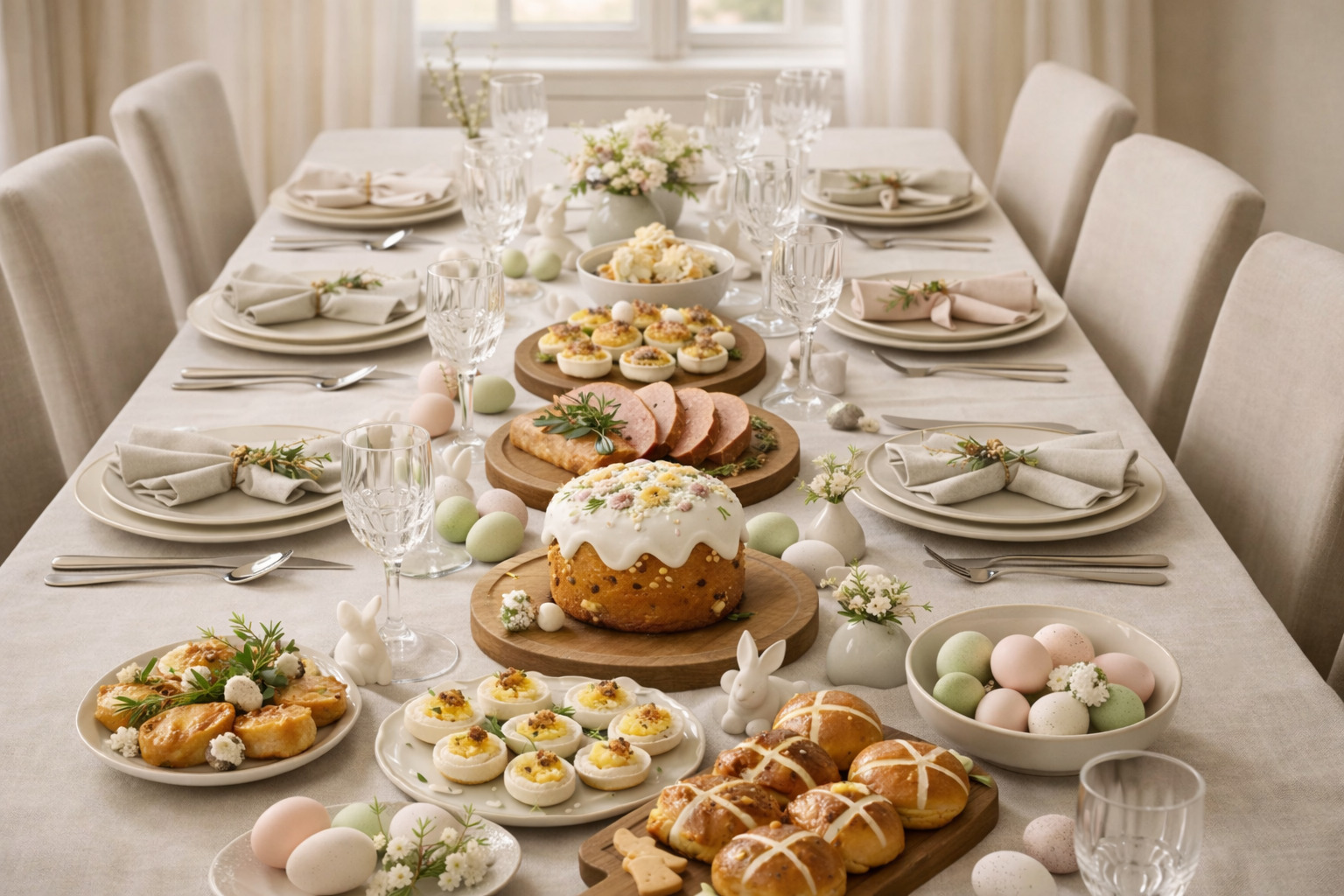
A table shaped by reality but filled with intention
Yes, food still matters. Prices are up, and choices are more calculated than before. In Canada this year, lamb remains a premium product, often priced between $6 and $20 per pound, pushing many households toward more accessible options like ham or turkey. Chocolate prices have increased by roughly 10% to 25%, largely driven by global cocoa shortages and supply pressure.
But something more interesting is happening beneath those numbers.
People are not simply cutting back.
They are redefining what Easter means.
For some, that means simplifying the menu but investing more into the atmosphere. For others, it means gathering more people around a modest table. The focus shifts from what is served to who is present.
Who celebrates Easter today
Easter in Canada — and broadly across Western countries — is no longer defined by a single meaning. It exists in layers.
Around 30–35% of Canadians still observe Easter primarily for religious reasons, attending church and following traditional customs.
Roughly 40–50% celebrate it as a cultural and family holiday, focused on gathering, food, and shared time.
Another 20–30% engage with Easter through aesthetics and lifestyle — decorating, hosting brunches, creating a visual and emotional experience.
These groups often overlap, but the shift is clear:
Easter is no longer only about belief. It is about connection.
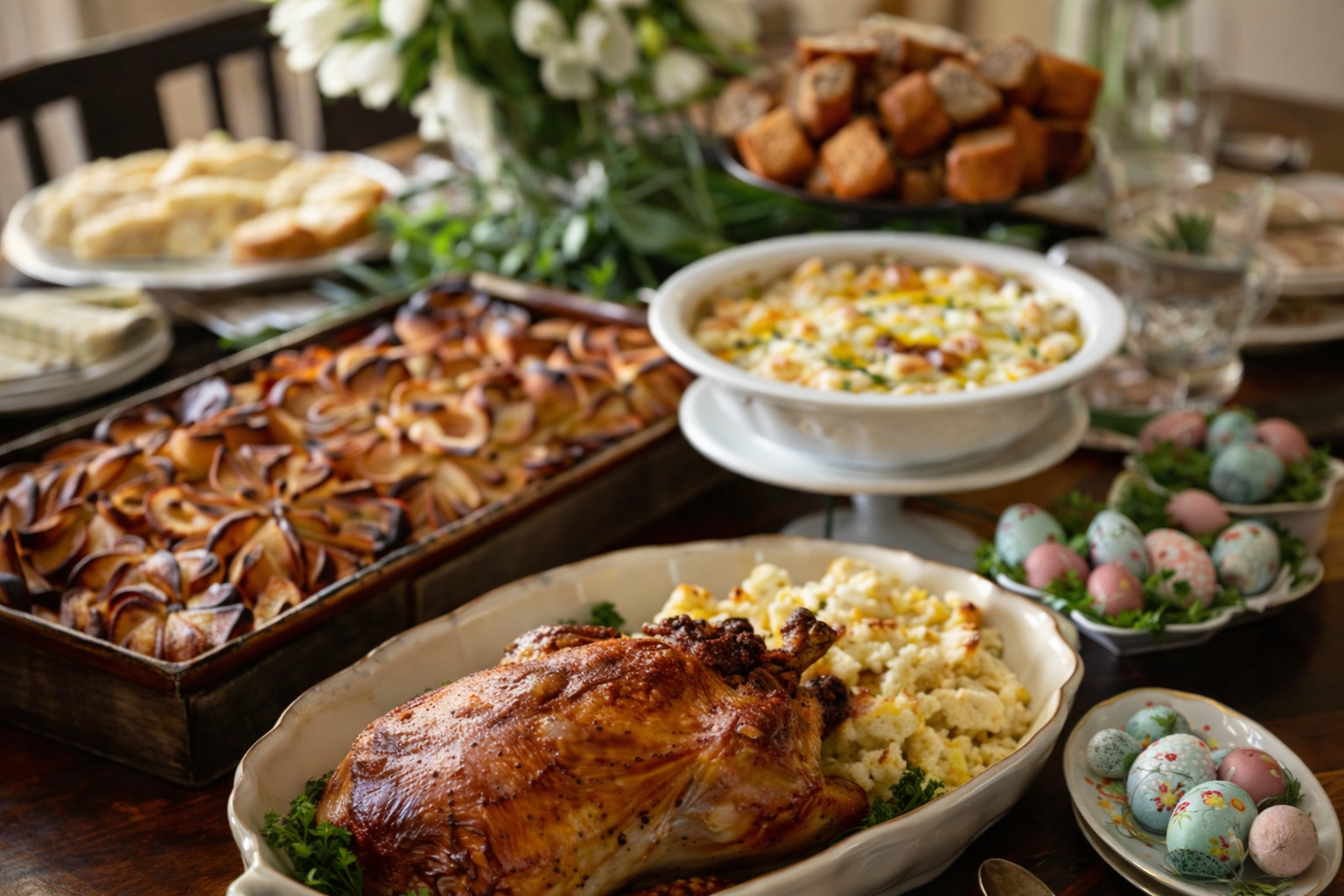
The rise of aesthetic Easter
Something subtle but unmistakable has happened to Easter in recent years: the table has become a statement. Not louder, not more extravagant — but more intentional.
Easter is no longer just cooked.
It is composed.
Search data confirms it. Queries like Easter table decor, spring brunch aesthetic, and Easter styling ideas continue to grow year after year. But this is not about trends in the superficial sense. It reflects a deeper shift in how people experience gatherings.
The modern Easter table is curated with the same care once reserved for special occasions. Natural textures replace excess. Linen over plastic. Ceramic over disposable. Flowers are not decoration — they are part of the narrative. Color palettes soften, compositions become lighter, and everything feels slightly more considered.
Not perfect.
But deliberate.
Food, in this context, is no longer the centerpiece in isolation. It becomes part of a wider visual and emotional composition — a setting designed to slow people down before they even sit.
This is not the disappearance of tradition.
It is its evolution into something more sensory, more personal, and more reflective of how people want to feel, not just what they want to eat.
A reason to gather, even without a reason
But the deeper shift is not visual — it is social.
For a growing number of people, Easter has quietly transformed into something else: a culturally accepted pause. A moment that gives permission to gather without needing justification.
No milestone required.
No formal invitation necessary.
Just a day that allows people to say: let’s meet.
Friends who have not seen each other in months suddenly do. Families reconnect without ceremony. Even those with no religious attachment to Easter still participate — because what the holiday offers is no longer only symbolic.
It offers structure to togetherness.
In a time where calendars are fragmented and communication is constant but often distant, this matters more than it seems. Easter creates a rare kind of alignment: people in the same place, at the same time, with no urgency to leave.
And that, increasingly, feels like luxury.
The emotional architecture of modern Easter
What defines Easter today is not uniformity, but elasticity.
There is no longer a single “correct” way to celebrate. One table may hold a carefully prepared lamb dish, another a light brunch with seasonal ingredients, another nothing more than coffee, bread and chocolate eggs.
And yet, across all variations, the emotional structure remains strikingly consistent.
Warm light that lingers longer than expected.
Conversations that stretch without interruption.
A subtle deceleration of time.
The value is no longer in perfection — not in the menu, not in the setting. It lies in proximity. In being physically present, without distraction, with people who matter.
This is not a return to tradition.
It is something quieter — and in many ways, more honest.
What Easter reveals in 2026
Easter has not lost its meaning.
It has redistributed it.
Economic pressure has reshaped what people put on the table. Rising food costs have made choices more intentional, sometimes more modest. But at the same time, social priorities have shifted.
People invest less in excess.
And more in experience.
The result is not a weakened holiday, but a more nuanced one. Tradition no longer dictates the form — it informs it. Culture no longer defines the gathering — it frames it. The table is still central.
But it is no longer the destination. It is the setting.
What matters now is what happens around it — the conversations, the presence, the quiet sense that, for a few hours, nothing else is competing for attention. And perhaps that is what Easter has become in 2026. Not a fixed ritual, but a chosen moment.

Daniel Hughes
Sustainability & Policy Correspondent
Daniel is interested in how environmental policy translates into real urban change. He specializes in sustainable mobility, climate-focused city planning, and the political frameworks behind transport systems. His writing brings together data, policy analysis, and on-the-ground impact, offering a clear view of how sustainability initiatives affect everyday urban life.
Advertise With Toronto Union 24
Reach over 500,000 engaged Canadian readers monthly. Premium placements available for Q2 2026.
Learn More