
How a Coffee Chain Became Shorthand for a Whole Country
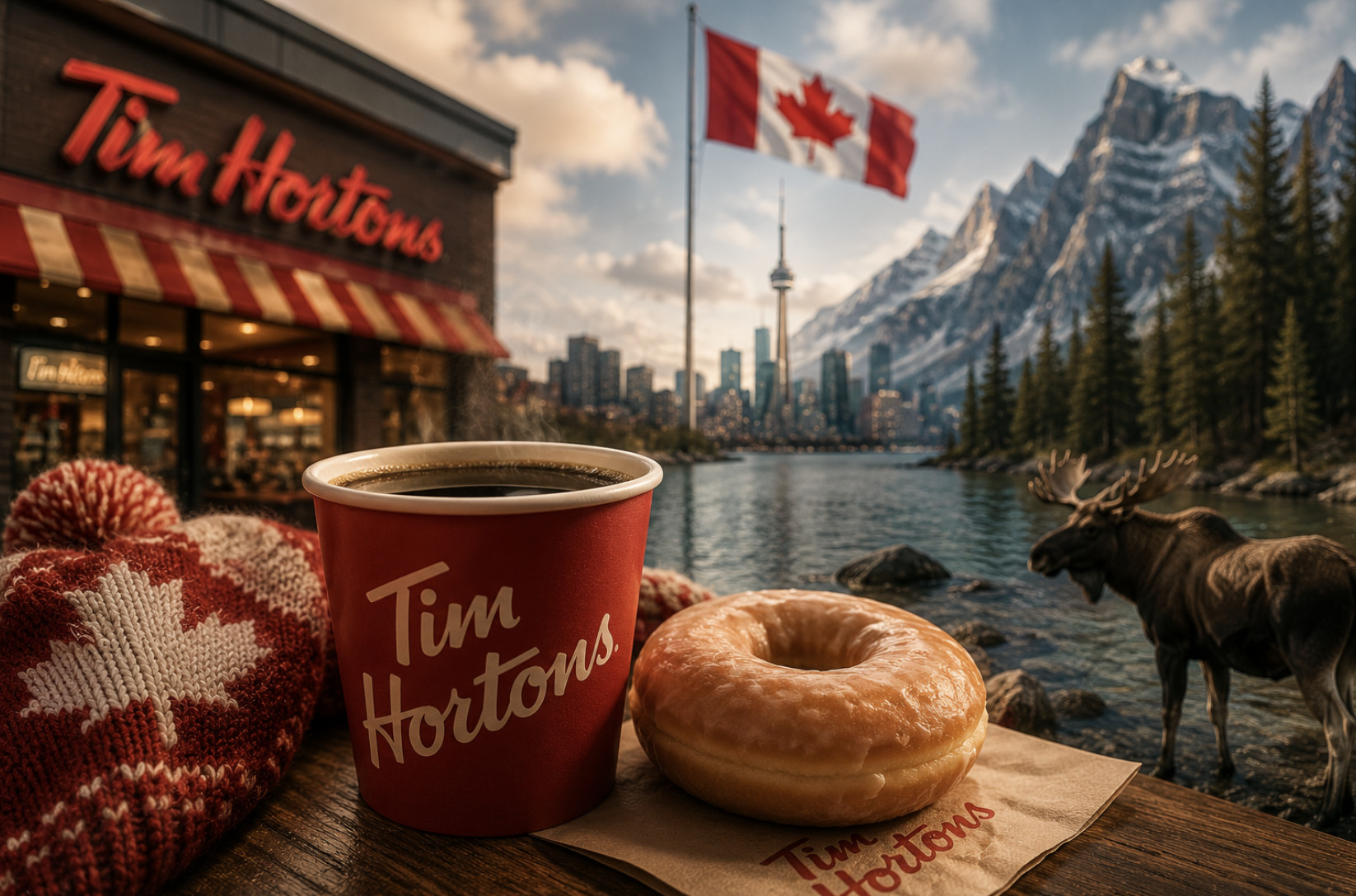
Every country has its accidental symbols — the objects and brands that come, over time, to stand in for something far larger than themselves. In Canada, one of the most powerful of these is not a flag, a landscape, or a monument, but a coffee-and-doughnut chain. Tim Hortons occupies a place in Canadian life that no marketing department could have designed, functioning less as a restaurant than as a shared national reference point, a piece of everyday infrastructure so woven into ordinary routine that mentioning it anywhere in the country produces instant recognition. How a fast-food chain came to carry that weight — to become a kind of cultural shorthand for Canada itself — is a story worth telling, because it reveals as much about the country as it does about the coffee.
Born on the ice
The origin is fitting for a nation that famously defines part of its identity through a winter sport. The chain carries the name of Tim Horton, a professional hockey player, and that detail is not incidental — it is the first thread connecting the brand to something already deep in the Canadian psyche. Long before it was a national institution, the enterprise was tied to hockey, the game that runs through Canadian culture more thoroughly than almost anything else, a bond we explored in why hockey still defines the Canadian winter. To begin as the venture of a hockey player was to begin, however modestly, already inside the country's mythology.
From those beginnings the chain grew in the most unglamorous and effective way imaginable: by spreading, steadily and relentlessly, into the ordinary fabric of towns and cities across the country. It did not arrive as a luxury or a novelty but as a convenience, planting itself on highway exits, in strip malls, near schools and hospitals and hockey rinks, until being close to one became a background fact of Canadian geography. The expansion was less a splashy conquest than a slow saturation, and that quality — becoming ordinary, becoming everywhere — turned out to be the foundation of everything the brand would later come to mean. You cannot become a symbol of everyday life without first becoming a part of everyday life, and that is precisely what it did.
The language of the everyday
One of the clearest signs that a brand has crossed from commerce into culture is when it generates its own vocabulary, and here the chain succeeded in a way few businesses ever do. Ordering became a small ritual with its own words, most famously the "double-double" — a coffee with two creams and two sugars — a term so widely understood that it long ago escaped the counter and entered general Canadian speech. When a phrase invented to speed up a coffee order becomes a word people simply know, something has happened beyond marketing: the brand has contributed to the shared language of a country, and shared language is one of the deepest markers of belonging.

The same absorption into daily life showed up in its promotions, which became seasonal rituals rather than mere sales tactics. The most famous of them turned the rim of a disposable cup into an annual national game, a small recurring event that people participated in together, discussed, anticipated, and complained about in the affectionate way reserved for shared traditions. That a coffee-cup contest could become a genuine cultural moment, recurring year after year and understood by everyone, is another measure of how far the brand had travelled from being simply a place to buy a drink. It had become a participant in the rhythm of the Canadian year, one of the small, repeated, collective experiences that quietly stitch a national culture together.
A place, not just a product
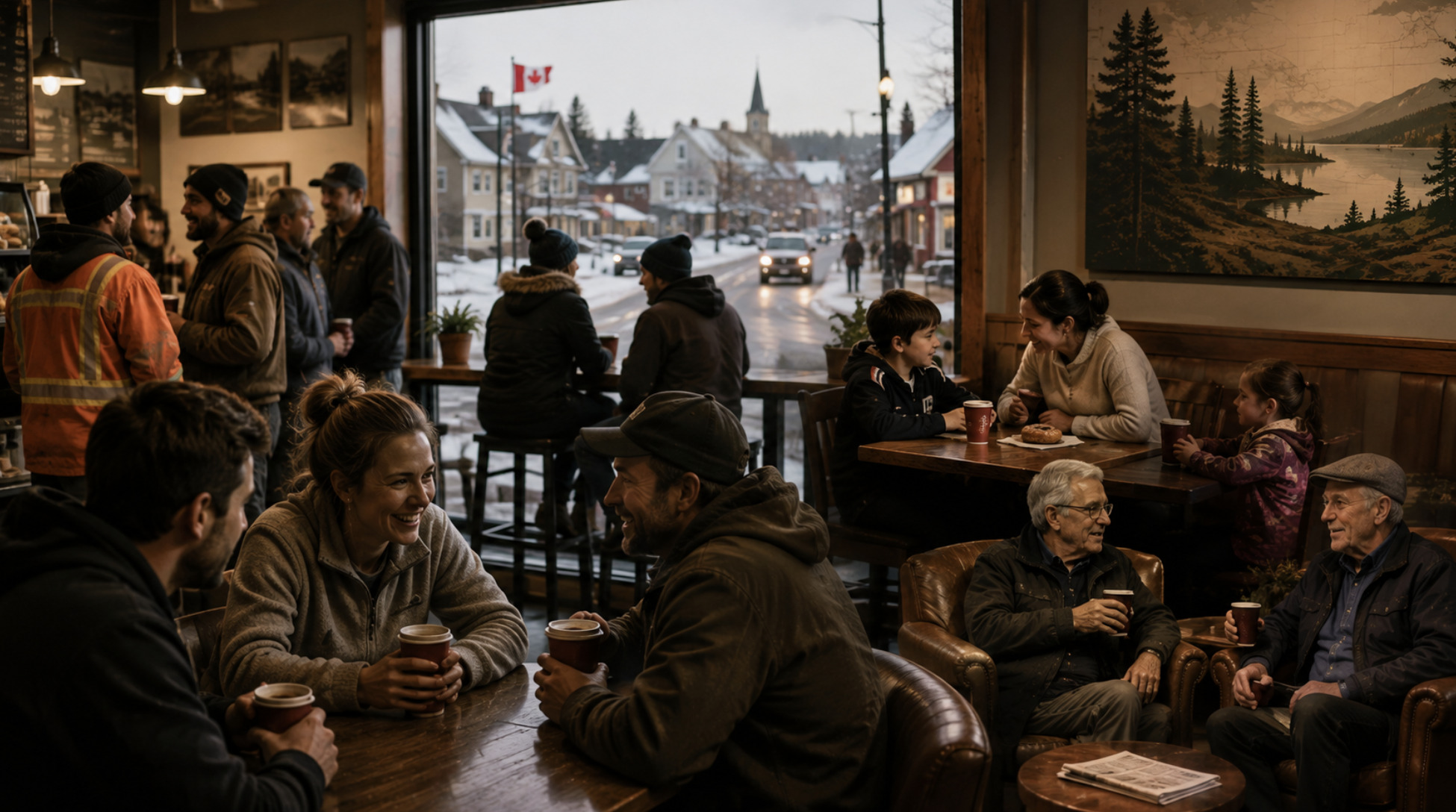
To understand why the chain matters so much, you have to see that its real product was never only the coffee. It was the place — the physical location that functioned as a kind of informal community hub, especially in the countless small towns and suburban neighbourhoods where such gathering spots are scarce. In a great many Canadian communities, a location of this chain became one of the default places where ordinary life happened: where early-morning workers gathered before their shifts, where parents took children after hockey practice, where retirees met for a slow coffee, where a community's daily traffic passed through.
This role as a common gathering place is central to the brand's meaning, because it made the chain something more than a transaction. It became associated with belonging, routine, and the texture of ordinary Canadian life — a setting for the unremarkable, repeated moments that actually make up most of existence. When a place hosts enough early mornings and after-practice snacks and casual conversations, it accumulates emotional weight; it becomes tied to memory and habit in a way a mere product never could. The affection many Canadians feel is not really for coffee, which is available anywhere, but for the place and everything it has quietly witnessed and hosted. The brand sells a drink, but what it came to represent is a gathering point woven into the ordinary life of communities across the country.
Identity, contested and complicated
No symbol this large remains simple, and part of what makes the chain a genuine cultural touchstone is that its meaning is contested rather than uniformly adored. As the brand grew and its ownership evolved through corporate mergers and consolidation, its status as a purely homegrown national icon became more complicated. To some, it remained a beloved emblem of Canadian identity; to others, changes in ownership, quality, or corporate behaviour complicated that affection, turning the brand into a subject of debate about authenticity, nostalgia, and what it means for a national symbol to be owned and operated by a large corporate entity. The shifts in who ultimately controlled the chain are part of a broader story about ownership and identity in the Canadian economy, a theme touched on in Canada's long tolerance of trade barriers with itself.
This contested quality is not a weakness in the brand's cultural standing — it is evidence of it. Things people do not care about do not generate debate; only symbols that genuinely matter get argued over, defended, and criticised with real feeling. The fact that Canadians can disagree passionately about whether the chain still represents what it once did, whether it has changed, whether it deserves its iconic status, is itself proof of how deeply embedded it is. A brand nobody cared about would simply be a place to buy coffee. A brand that provokes arguments about national identity has become something else entirely — a mirror in which a country examines its own sense of itself, its nostalgia, and its anxieties about change.
What the coffee says about the country
Step back from the chain itself and its rise reveals something about how national symbols actually form, which is rarely by design. No one set out to make a coffee shop into a stand-in for Canada; it happened through decades of ordinariness, through being everywhere and hosting everything, through becoming so embedded in daily routine that it absorbed the emotional weight of the routine itself. The most powerful cultural symbols are often not the grand ones but the humble, ubiquitous ones — the things people encounter so constantly that they stop noticing them, until one day they realise the thing has come to mean home. That is a very different path to iconic status than a monument or an anthem takes, and arguably a more intimate one.
It is also revealing that a country would find one of its most potent symbols in something so unpretentious. A coffee-and-doughnut chain named after a hockey player, planted on highway exits and in strip malls, is not a symbol of grandeur or ambition; it is a symbol of the everyday, the accessible, the shared and unremarkable. That Canadians would invest so much identity in something so ordinary says something genuine about a national character that tends to locate itself in modesty, routine, and the quiet textures of common life rather than in spectacle. The chain became shorthand for Canada not despite being ordinary but because of it — and in that, perhaps, it captured its country more accurately than any grander symbol ever could. The coffee was always beside the point. What people were really lining up for, morning after morning, was a small, warm, familiar piece of belonging, and that is the thing that turned a fast-food chain into a mirror for a nation.

Aila Kenuak
My name is Aila Kenuak, a proud Indigenous writer from the rugged coastlines of Newfoundland and Labrador. I come from a community where stories are carried through generations—spoken, remembered, and deeply felt. My work is rooted in those traditions, shaped by the land, the ocean, and the resilience of our people.
To the readers of Toronto Union 24, I write with a commitment to truth, clarity, and connection. Whether covering breaking developments or long-form stories, I aim to bring voices forward that are too often overlooked. Canada is vast and diverse, and every story deserves to be told with respect and depth.
Thank you for reading, listening, and staying informed.
Advertise With Toronto Union 24
Reach over 500,000 engaged Canadian readers monthly. Premium placements available for Q2 2026.
Learn More Noah Bennett
  Ethan Walker