
Sarah Polley Is Directing Billie Eilish in The Bell Jar and Toronto Is About to Become Sylvia Plath's World
Sylvia Plath's The Bell Jar is about a young woman watching herself come apart in a city that does not notice. It is, in its way, one of the great novels about the inside of a mental breakdown — clinical and precise and deeply personal, written in a voice that feels like it is being narrated from just after the event, barely. It has been adapted once before, unsuccessfully, in 1979. For decades, no one seriously tried again.
That has changed. Sarah Polley is directing a new film adaptation, starring Billie Eilish, filming in Toronto from June 25 to August 7, 2026.
Why This Casting Makes Sense
The instinct to see Billie Eilish and Sylvia Plath's Esther Greenwood as a natural pairing is not merely aesthetic, though the aesthetic argument is real enough — Eilish has built an entire public persona around the interior experience of young women navigating mental illness, creative pressure, and public scrutiny, all of which are also the subject matter of The Bell Jar.
The deeper argument is about register. Esther Greenwood is not performing mental illness for the people around her. She is experiencing it in a way that is invisible to the people around her — high-functioning from the outside, disintegrating from the inside. That specific mode of experience — of being in crisis while the world proceeds normally — is something Eilish has talked about publicly with unusual directness.
Whether she can carry a film is a different question. The Bell Jar is a demanding role: sustained psychological interiority, period detail, and a narrative arc that ends in the immediate aftermath of attempted suicide and shock treatment. There is no obvious comparable role in Eilish's acting background.
There is, however, Sarah Polley.
What Polley Brings
Polley's filmography is not long, but it is consistent in a way that matters for this project. Women Talking and Stories We Tell are both films about the way women process and narrate experience that is difficult, private, and partly incomprehensible — to themselves and to others. Women Talking won the Academy Award for Best Adapted Screenplay. Both films are technically precise and emotionally unsparing in a way that suggests a director who knows exactly what kind of attention difficult material requires.
The Bell Jar is the right project for that sensibility. It is not a melodrama about mental illness. It is a first-person account of what mental illness feels like from inside, narrated by someone who has already survived it but is still not entirely sure what happened to her. Adapting that requires a director who trusts the audience to sit with discomfort without being rescued by narrative resolution. Polley has demonstrated that trust.
The production has significant backing: Plan B Entertainment, StudioCanal UK, and Focus Features are all attached as producers. This is not a small prestige project. The budget and distribution infrastructure suggest a film built to reach an international audience.
What Toronto Means for This Production
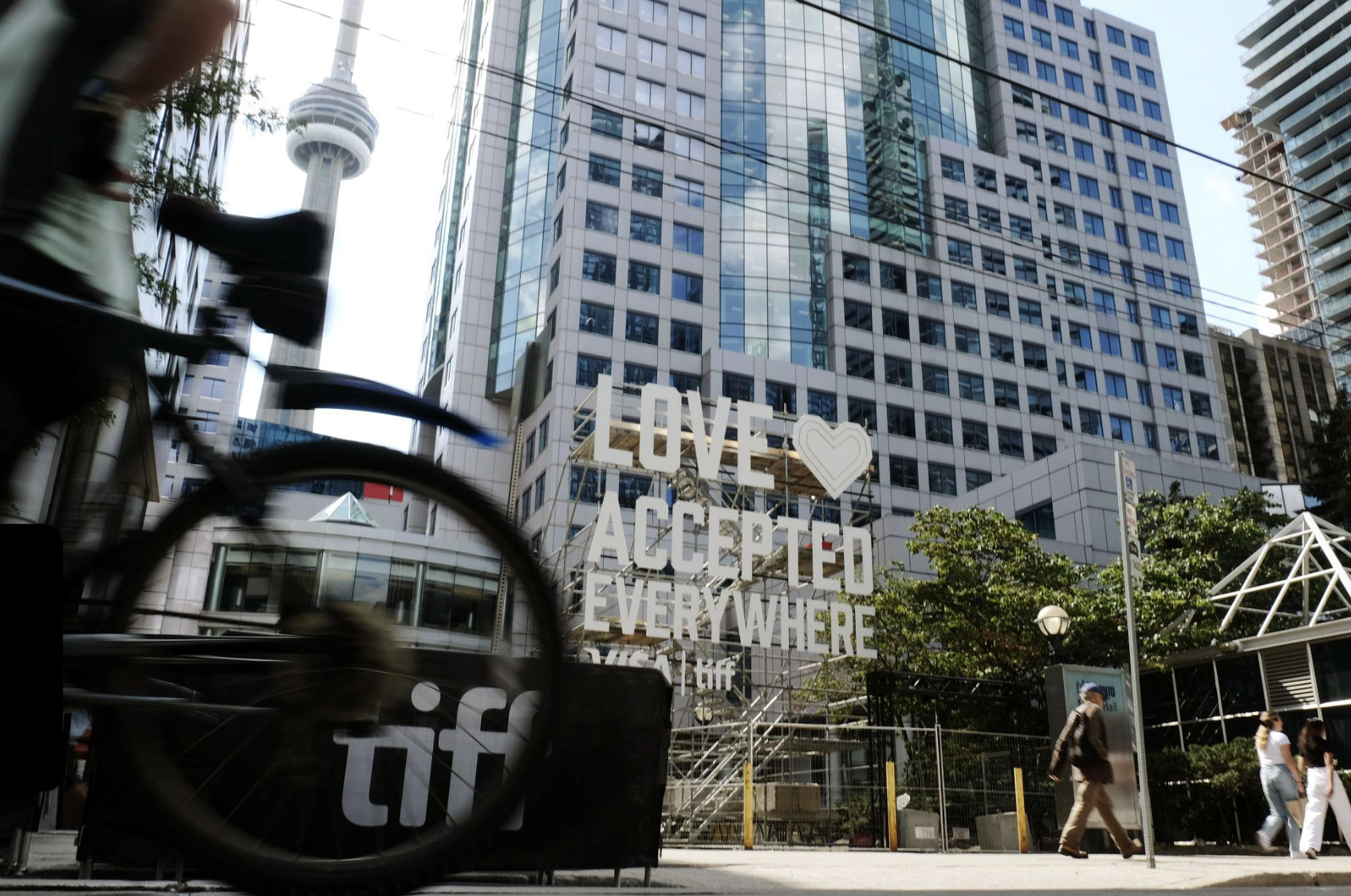
Toronto is standing in for New York City in the early 1950s — Esther Greenwood's world, the magazine offices, the asylum, the New England suburb. This is a familiar arrangement for Toronto productions, and the city's track record of period transformation is well established.
What is less typical is the symbolic resonance of a film about a woman's mental breakdown and recovery being made in the same city where Billie Eilish will spend the summer. Toronto is, increasingly, a place where the most significant English-language film productions choose to land — not merely for tax credits but because the city can provide what these productions need: scale, architectural variety, technical infrastructure, and a film community sophisticated enough to execute difficult work at speed.
The Bell Jar filming window runs six weeks, from late June through early August. For the duration of that shoot, parts of Toronto will be transformed into the early 1950s. Residents near the identified filming locations will notice. The rest of the country will notice when the film is released.
No release date has been announced. Production companies do not typically schedule post-production timelines at this stage. Given the production backing and the profile of the project, a major festival premiere — TIFF 2027 would be the obvious candidate — seems probable.
The Larger Context
This is one of several significant English-language productions currently scheduled for Toronto in 2026. Among the others: Reacher Season 5 (Alan Ritchson, July through December), Twisted Metal Season 3 (Anthony Mackie, June through August), the Bruce Miller-helmed project at HuluStudios (Ann Dowd, summer), and Doc Season 3 with Molly Parker in Oakville soundstages.
The volume is not accidental. Toronto's position as North America's third-largest film production centre — and the largest in Canada by a substantial margin — is the product of two decades of sustained investment in studio infrastructure, crew development, and a provincial incentive programme that makes the city competitive with the most favourable production environments in the world.
What The Bell Jar adds to that list is cultural weight. This is not a streaming procedural or a franchise entry. It is an adaptation of one of the most significant English-language novels of the 20th century, directed by one of Canada's most respected filmmakers, starring one of the most globally recognisable young artists alive.
Toronto is used to hosting important productions. This one is something more specific: a major Canadian film, made by a Canadian director, about an American novel, with a global star, in a Canadian city pretending to be somewhere else. There is something characteristically Toronto about that arrangement — the city as adaptable, invisible, capable of becoming whatever the story requires.
Noah Bennett
Cycling Industry & Tech Writer
Noah is passionate about the mechanics behind movement — from bike engineering to emerging mobility technologies. He covers innovations in cycling equipment, e-bikes, and urban transport solutions, combining technical understanding with real-world usability. His articles explore how technology is reshaping everyday transportation and redefining the future of city commuting.
Advertise With Toronto Union 24
Reach over 500,000 engaged Canadian readers monthly. Premium placements available for Q2 2026.
Learn More Aila Kenuak
  Ethan Walker