
Why Grocery Prices in Canada Keep Climbing
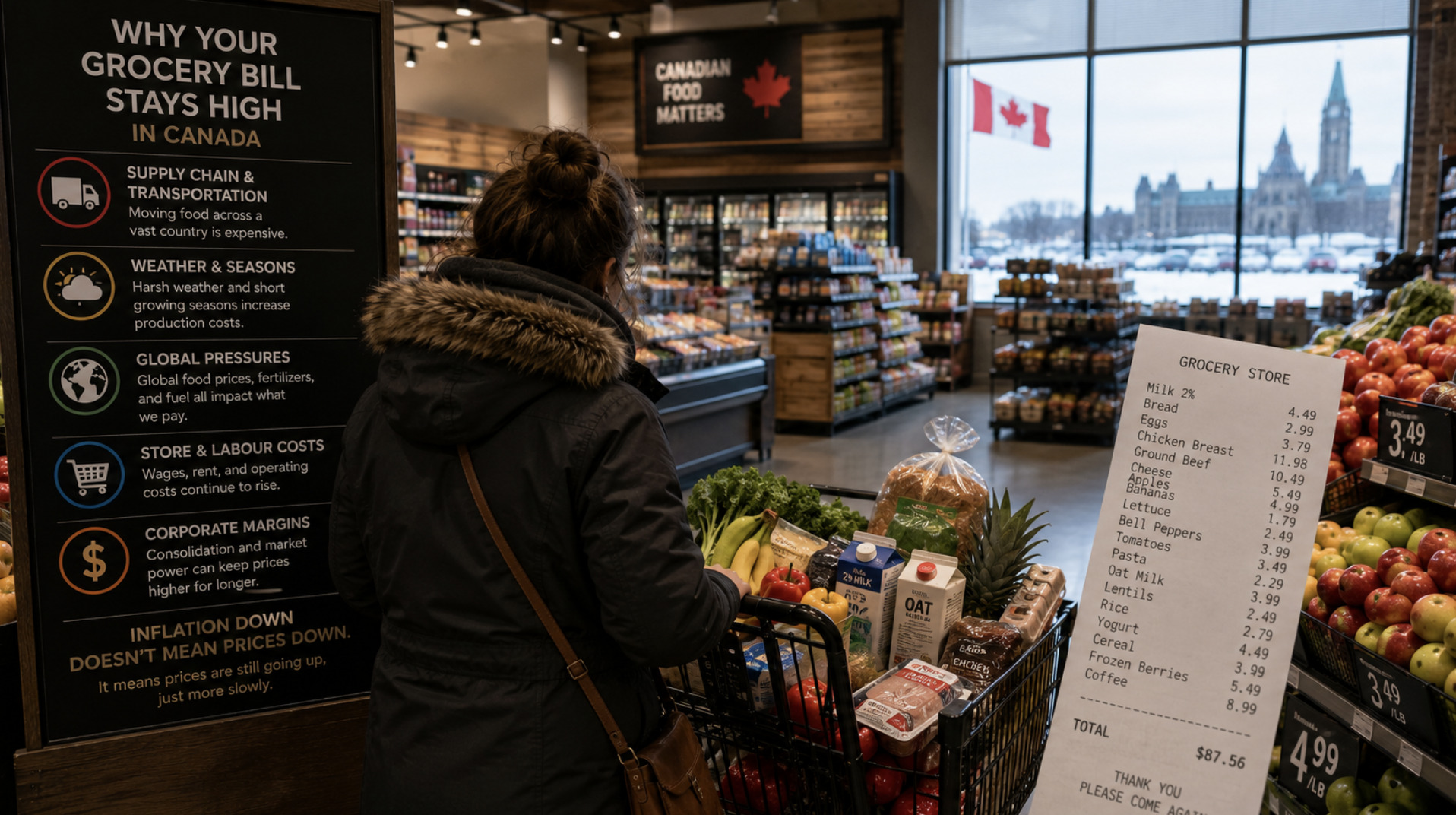
Few things unite Canadians across every region and income bracket quite like the shared shock at the checkout. The bill for what feels like the same cartful of groceries keeps creeping upward, and even as headlines announce that inflation has cooled, the price of feeding a family stubbornly refuses to follow. It is one of the most keenly felt economic pressures in the country, and one of the most misunderstood. Falling inflation does not mean prices fall — it means they rise more slowly — and food has its own set of forces pushing it up that have little to do with the general rate. Understanding why the grocery bill stays high means looking past the headline number at what actually determines the cost of food in Canada.
Inflation cooling is not prices falling
The first and most important thing to clear up is a confusion that causes a great deal of frustration. When people hear that inflation has come down, many reasonably expect prices to come down with it. But inflation is the rate at which prices rise, not the prices themselves. A lower inflation rate means the climbing has slowed, not reversed — the elevated prices of the past couple of years are, for the most part, still with us, and generally still inching higher, just less dramatically than before.
This is why the checkout can feel disconnected from the good economic news. The cumulative jump in food prices over recent years does not unwind simply because the annual rate has eased; that increase is baked in, and only rarely do prices actually retreat. So a Canadian family can hear that inflation is under control and still, truthfully, be paying far more for groceries than they did a few years ago. The two facts are not in contradiction. The relief promised by cooling inflation is a slower rate of pain, not the removal of it, and food makes that gap especially visible.
The forces specific to food
Beyond the general economy, groceries are pushed around by pressures that are peculiar to food itself, which is why they so often behave differently from other prices. The clearest is weather and climate. Food is grown, and growing is at the mercy of droughts, floods, frosts and heat waves that damage harvests and drive up the cost of everything from produce to the grain that feeds livestock. A bad season in a major growing region — at home or abroad — ripples through to Canadian shelves in a way that has nothing to do with interest rates.
Two further forces compound this. The first is the exchange rate: Canada imports an enormous share of its food, especially fresh fruit and vegetables through the long winter, and those imports are paid for in other currencies, so when the Canadian dollar weakens, imported food becomes more expensive regardless of anything happening domestically. The second is the cost of everything it takes to move food from farm to shelf — the fuel, transportation, packaging and labour woven through a long supply chain. When those input costs rise, they are passed along to the final price, and they have risen substantially. None of these levers is pulled by the general inflation rate, which is exactly why food can stay expensive while other prices calm down.
The question of competition
There is a further, more contested piece of the puzzle, and it deserves an honest airing because it is where much of the public anger is directed. Canada's grocery sector is dominated by a small number of very large chains, and that concentration raises a reasonable question about how much competition actually disciplines prices. When only a handful of players control most of the market, the pressure that a crowded, competitive field would normally exert to keep prices low is weaker, and shoppers are left wondering whether they are paying a fair price or a captive one.
It is worth being careful here rather than sweeping. The industry points, accurately, to the genuine external cost pressures described above — weather, the dollar, supply-chain expenses — as the main drivers, and those are real. Critics counter that heavy market concentration allows those cost increases to be passed on fully, and margins protected, in a way that more competition might prevent. Both things can be partly true at once: real costs are rising, and a concentrated market may reduce the downward pressure that would otherwise soften how much of that reaches the shopper. The debate over how much of the grocery bill is unavoidable cost and how much is a symptom of too little competition is unresolved, and it sits alongside broader questions about the structure of the Canadian economy that we explored in Canada's long tolerance of trade barriers with itself.
What it means for households
For the Canadians actually paying these bills, the practical upshot is sobering but clarifying. Because the increases are driven largely by structural forces — climate, currency, supply-chain costs and market structure — rather than by a temporary spike that will simply pass, there is no quick reversal on the horizon, and waiting for prices to fall back to where they were is likely to be a long wait. The elevated cost of food looks less like a passing storm and more like a new baseline that households are adjusting to.
That reframing at least helps direct energy usefully. It explains why budgeting strategies, watching for genuine deals, and reducing waste have become such a focus for families — not as a temporary measure until things return to normal, but as an ongoing adaptation to a higher plateau. And it sharpens the public conversation about the parts that are within policy's reach, particularly the question of competition, since the weather and the exchange rate cannot be legislated but market structure can. Grocery prices in Canada keep climbing because several powerful currents are pushing them the same way at once, and cooling inflation, welcome as it is, was never going to turn that tide on its own.
Frequently asked questions
If inflation is falling, why are groceries still getting more expensive? Because inflation is the rate at which prices rise, not the prices themselves. A lower inflation rate means prices are climbing more slowly, not falling. The large increases of recent years remain, and food generally keeps inching up, so the checkout can feel disconnected from news that inflation has cooled.
What drives food prices up in Canada specifically? Forces particular to food: weather and climate damaging harvests, a weaker Canadian dollar making the large share of imported food more expensive, and rising supply-chain costs — fuel, transport, packaging and labour — that get passed to the final price. None of these is controlled by the general inflation rate.
Does lack of competition make Canadian groceries more expensive? It is debated. Canada's grocery market is dominated by a few large chains, and critics argue this concentration lets cost increases be passed on fully and margins protected, where more competition might soften prices. The industry points to genuine external costs as the main driver. Both factors may contribute at once.

Daniel Hughes
Sustainability & Policy Correspondent
Daniel is interested in how environmental policy translates into real urban change. He specializes in sustainable mobility, climate-focused city planning, and the political frameworks behind transport systems. His writing brings together data, policy analysis, and on-the-ground impact, offering a clear view of how sustainability initiatives affect everyday urban life.
Advertise With Toronto Union 24
Reach over 500,000 engaged Canadian readers monthly. Premium placements available for Q2 2026.
Learn More Noah Bennett