
Why the Human Brain Is Fascinated by Uncertainty
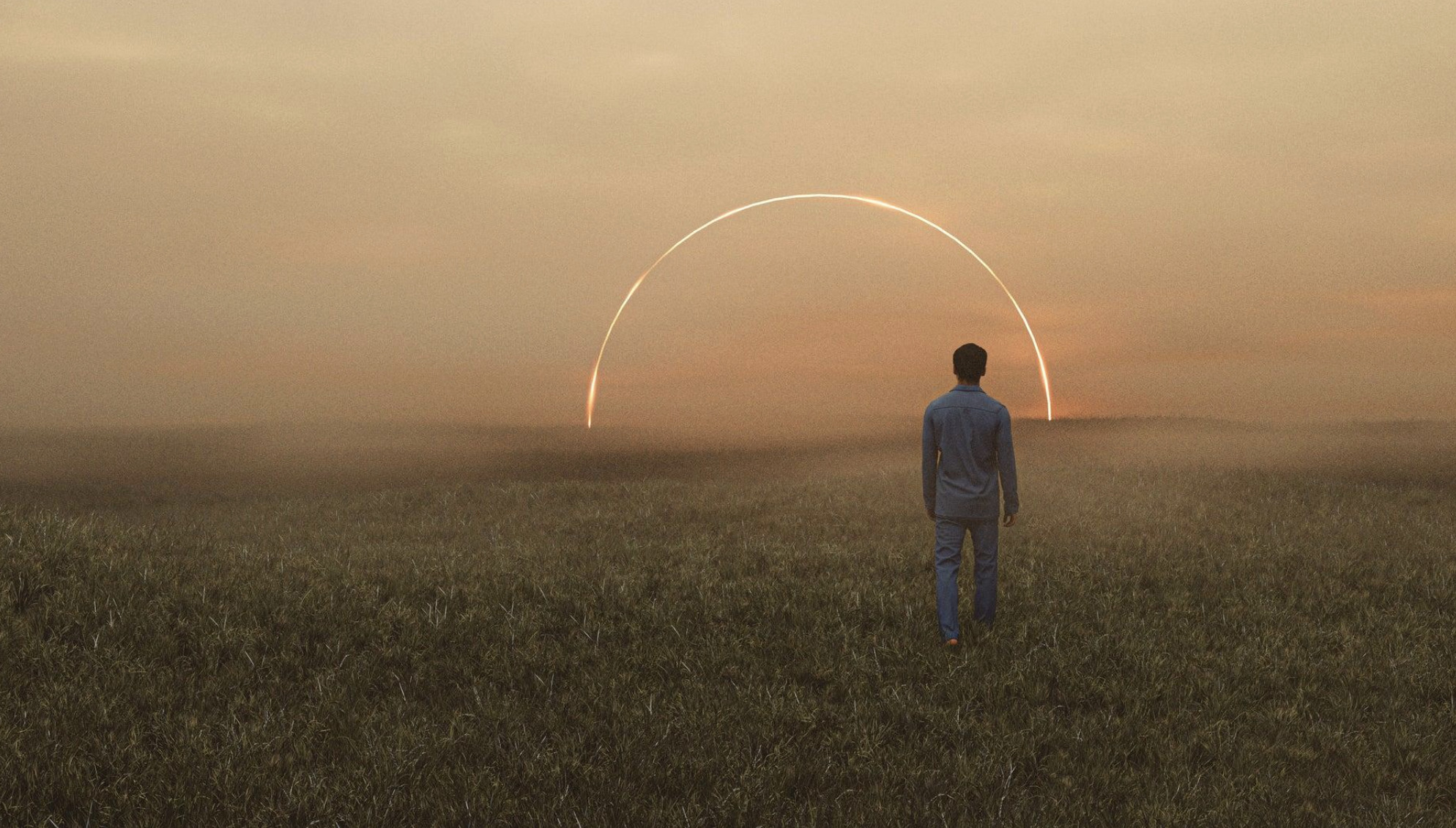
There is a peculiar tension at the heart of human behaviour. We claim to dislike uncertainty, to find it stressful and to seek it out only reluctantly, and yet we are powerfully, almost helplessly, drawn to it. We refresh feeds to see what is new, we cannot resist opening the mystery box, we feel the pull of the not-yet-known with an intensity that certainty never matches. This is not a character flaw or a quirk of willpower. It is built into the machinery of the brain, and the science of how it works reveals that uncertainty is not merely tolerated by the reward system but is, in a real sense, its favourite food.
Dopamine Is About Anticipation, Not Pleasure
The story begins with dopamine, the brain chemical most often, and most misleadingly, described as the pleasure molecule. Decades of research have steadily overturned that simple picture. Dopamine is far less about the enjoyment of a reward than about the pursuit of it. It is the chemistry of wanting rather than liking, of anticipation rather than satisfaction. When researchers separated these two systems, they found that the pleasure of actually consuming a reward depends on different circuitry, while dopamine surges most strongly in the run-up, during the chase, in the charged interval before the outcome arrives. Dopamine, in other words, is the fuel of seeking, and seeking is precisely what uncertainty demands.
This reframing matters enormously, because it explains why anticipation so often feels more vivid than arrival. The dopamine system is built to drive us toward things, not to bask in them once obtained, and so the period of not-yet-having is where its activity peaks. The brain is, at the chemical level, more interested in the question than the answer.
The Brain as a Prediction Machine
To understand why uncertainty in particular excites this system, it helps to know what dopamine neurons are actually computing. A landmark line of research revealed that these neurons do not simply respond to reward; they respond to the difference between expected and received reward, a quantity scientists call the reward prediction error. When something better than expected happens, the neurons fire in a burst. When events unfold exactly as predicted, they stay quiet. And when an expected reward fails to arrive, their activity dips below baseline, registering disappointment as a kind of negative signal. The brain, in this view, is a relentless prediction machine, constantly forecasting what is about to happen and learning from the gap between forecast and reality.
This design has a striking consequence. A fully predictable reward, one the brain has already learned to expect, eventually produces almost no dopamine response at all, because there is no prediction error left to signal. The thrill fades not because the reward got smaller but because it became certain. Surprise, the violation of expectation, is the currency the system actually trades in, and certainty is the one thing guaranteed to bankrupt it.
Why Uncertainty Is the Peak Stimulus
The most revealing discovery came when researchers manipulated not the size of a reward but the probability of receiving it. They found that dopamine activity did not simply track how likely a reward was. Instead, a sustained ramp of dopamine activity rose as the outcome became less predictable, reaching its maximum when the chance of reward was poised exactly at fifty-fifty, the point of greatest uncertainty. In other words, the brain responds most strongly not to a guaranteed reward, nor to no reward, but to the pure suspense of genuinely not knowing. Uncertainty itself, independent of the prize, drives the system hardest.
This dynamic helps explain why environments built around anticipation and possibility, including platforms such as Dicepalace online casino, can feel so psychologically compelling. The emotional intensity does not come solely from the outcome itself but from the period before the outcome is known, when multiple futures still seem possible and the brain remains fully engaged with what might happen next.
This is the engine behind anticipation cycles. When an outcome is uncertain, the brain holds itself in a heightened state of expectation, and that state is intrinsically arousing. The mind leans forward, attention sharpens, and the body prepares for a result it cannot foresee. The feeling we experience as excitement, tension, or thrill is in large part this dopaminergic anticipation, sustained by the simple fact that we do not yet know how things will turn out. Resolve the uncertainty and the state collapses; restore it, and the pull returns.
The Power of the Unpredictable Reward
Long before anyone could measure dopamine, behavioural scientists had already discovered the behavioural footprint of all this. Studying how patterns of reward shape behaviour, they found that rewards delivered unpredictably, on what is called a variable schedule, produce far more persistent and compulsive behaviour than rewards delivered reliably. An animal rewarded every single time will work steadily but will also stop quickly once the rewards cease. An animal rewarded at random intervals, never knowing which action will pay off, will keep going far longer and far harder. Unpredictability, it turned out, was the most powerful reinforcer of all, precisely because each attempt carries the live possibility of a reward and the brain cannot extinguish a behaviour whose payoff it can never quite predict.
This explains a great deal about why certain experiences grip us so tightly. The same principle, the irresistible pull of the intermittent, uncertain reward, sits at the core of why we compulsively check our phones, why a feed that sometimes serves something delightful is so hard to put down, and why games of chance exert such a hold. Each of these wraps a genuinely random payoff in a tight anticipation cycle, and the brain, doing exactly what it evolved to do, responds with the full force of its seeking machinery.
An Ancient System in a Modern World
It is worth asking why brains would be built this way, and the answer lies deep in our evolutionary past. For an animal foraging in an unpredictable world, uncertainty was the signal that learning was still possible and that exploration might pay off. A system that drove creatures to keep seeking, to stay alert and curious wherever outcomes were uncertain, was enormously adaptive. The thrill we feel in the face of the unknown is the modern echo of an ancient impulse to explore, to gather information, to find the food or the opportunity that an uncertain environment might be hiding. Our fascination with uncertainty is, at root, the fascination of a learning creature with a world it has not yet figured out.
The complication is that this ancient system now operates in an environment engineered to exploit it. Where uncertainty once reliably accompanied genuine opportunity, it can now be manufactured at will and attached to things that offer no real benefit, hijacking a mechanism designed for survival and turning it toward consumption. Understanding this is genuinely protective. To know that the pull you feel toward the unpredictable is your dopamine system responding to engineered suspense, rather than a signal that the thing in front of you is worth your time, is to gain a small but real measure of freedom from it. The brain's fascination with uncertainty is not something to be ashamed of or even something we could switch off if we wanted to. It is one of the deepest features of how we learn, feel, and stay alive to the world. But like any powerful drive, it is best lived with knowingly, with some awareness of the remarkable machinery that makes the unknown feel, so reliably, like the most interesting thing in the room.

Daniel Hughes
Sustainability & Policy Correspondent
Daniel is interested in how environmental policy translates into real urban change. He specializes in sustainable mobility, climate-focused city planning, and the political frameworks behind transport systems. His writing brings together data, policy analysis, and on-the-ground impact, offering a clear view of how sustainability initiatives affect everyday urban life.
Advertise With Toronto Union 24
Reach over 500,000 engaged Canadian readers monthly. Premium placements available for Q2 2026.
Learn More Ethan Walker