
Raptors on the Brink: Down 3-2 to Cleveland, Toronto Needs Everything From Scottie Barnes in Game 6
The Toronto Raptors came into the 2026 NBA Playoffs as a team that wasn't supposed to be here — and for four games against the Cleveland Cavaliers, they played like a team that had decided the script didn't apply to them. Then came Game 5.
The Cavaliers escaped Cleveland with a 125-120 victory on Wednesday night, taking a 3-2 series lead and putting Toronto's season in immediate jeopardy. Game 6 is Friday night at Scotiabank Arena, 7:30 p.m. ET, with the Raptors needing a win to force a Game 7 on Sunday. The historical math on their situation is straightforward and uncomfortable: teams that win Game 5 of a series tied 2-2 go on to win the series 82.8% of the time, according to The Athletic's Esfandiar Baraheni.
Toronto has been in this situation before. The question is whether this particular version of the Raptors — shorter, younger, and missing key personnel — has the depth to execute a season-saving performance at home.
What Went Wrong in Game 5
Through three quarters on Wednesday, the Raptors were in a genuine position to take control of the series. The two teams had combined for 21 more points than they'd managed over 48 minutes in Game 4, the shots were falling, and Toronto's pace was causing problems for Cleveland's half-court defence.
Then the fourth quarter arrived and the Raptors went cold. James Harden and Evan Mobley led the Cavs with 23 points apiece, while Dennis Schröder — who had been quiet for much of the game — scored 11 of his 19 points in the final period. Donovan Mitchell and Schröder each finished with 19 points, and Cleveland's shot-making at critical moments proved decisive.
The pattern will concern Toronto's coaching staff. The Raptors led or were competitive through three quarters in multiple games of this series, only to see their offence stall when Cleveland tightened its defensive rotations in crunch time. With Immanuel Quickley out day-to-day with a mild right hamstring strain, Toronto's ball-handling depth and shot creation in the fourth quarter is further compromised.
Brandon Ingram's struggles have compounded the problem. The veteran forward is shooting just 19-for-58, or 33%, across five playoff games — a performance well below his regular-season standards that has effectively reduced Toronto's half-court offence to a Scottie Barnes-driven operation with insufficient secondary options.
The Barnes Factor
Scottie Barnes is averaging 24.0 points and 5.4 rebounds in this series, and the Raptors' performance with him on the floor versus off it tells a stark story. In the stretches — roughly 19 minutes across Game 5 — when either Barnes or RJ Barrett was on the bench, Toronto was outscored by 14 points. The margin is unsustainable in a competitive series, and it reflects the degree to which the team's offensive functioning runs through a player who cannot be on the floor for every minute.
Cleveland's adjustment has been to ensure that when Barnes drives, there is a body in his path and a help defender ready. The Cavaliers have Evan Mobley and Jarrett Allen — two legitimate rim protectors who can discourage penetration while maintaining the capability to switch onto perimeter players. The double-big frontcourt gives Cleveland options that Toronto's offensive design has not consistently solved.
What Barnes needs in Game 6 is not a different game but a better supported one. The secondary scorers — Barrett, Collin Murray-Boyles, who has been a positive surprise with multiple double-doubles, and whoever steps up from the bench rotation — need to force Cleveland's defence to make choices rather than simply loading up on stopping Barnes.
Cleveland's Structural Advantage and How Toronto Exploits It
The most significant structural advantage the Cavaliers carry into this series is their ability to keep a high-level player on the floor for all 48 minutes. Harden or Mitchell is always available; Mobley or Allen is always available. The depth of their two-man combinations means their reserves play against Toronto's best, which is where Cleveland has most consistently won the battle of margins.
Toronto's counter is pace. When the Raptors push tempo and force Cleveland to defend in transition — a condition in which Mobley's rim protection advantage is neutralised and Harden's defensive limitations are exposed — the series becomes more even. The problem is that maintaining pace for 48 minutes requires a conditioning and depth advantage that the Raptors, with Quickley unavailable, do not currently have.
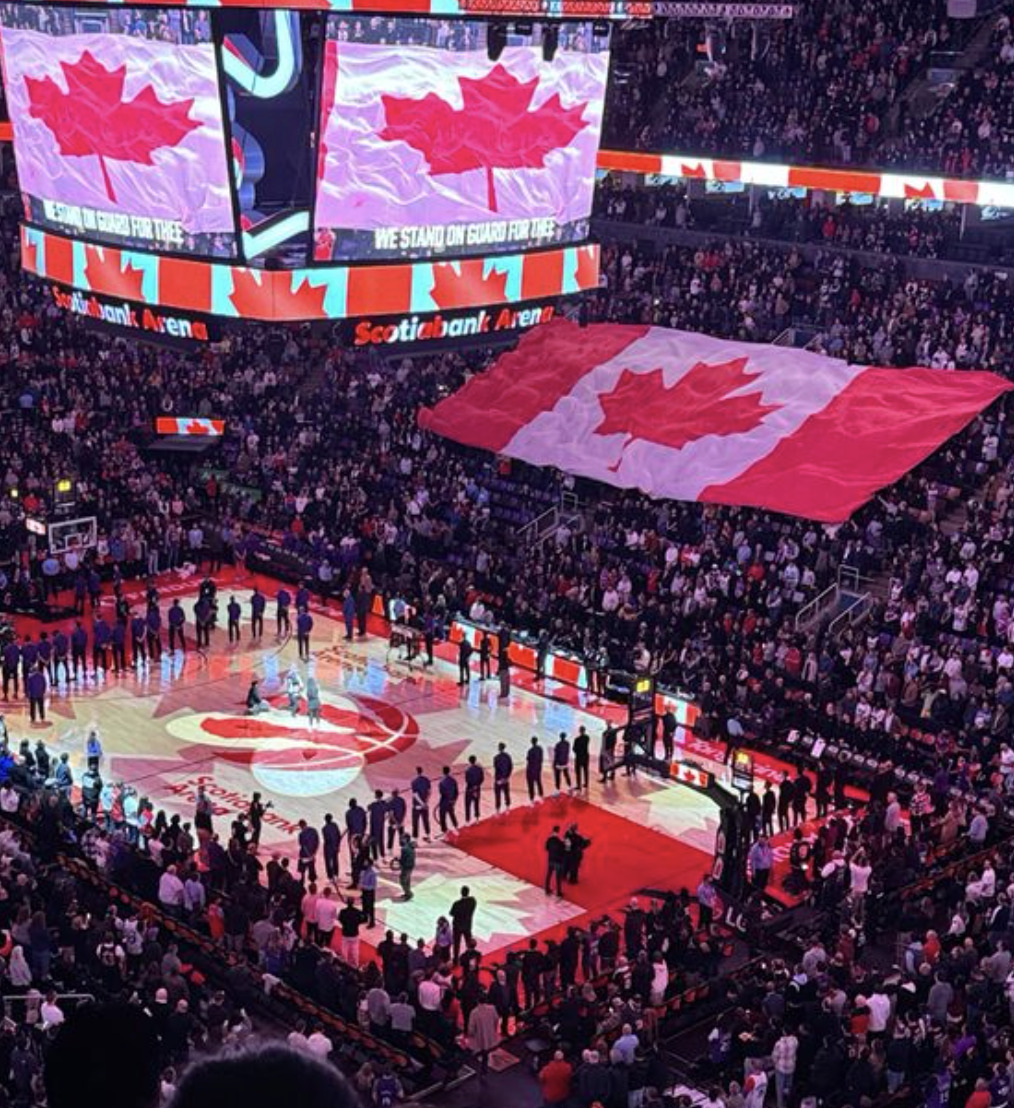
The home crowd at Scotiabank Arena is a genuine factor in a Game 6 elimination context. Toronto's fans have demonstrated, through multiple meaningful home games this season, that they can generate the kind of atmospheric pressure that forces the visiting team into rushed decisions and contested shots. If the Raptors can get to the fourth quarter within striking distance — a condition they have met in most games of this series — the crowd can close the gap that individual talent differentials open.
What This Season Already Achieved
Whatever happens on Friday, the 2026 Toronto Raptors have already delivered something the pre-season projections did not promise. Scottie Barnes at 24.0 points per game in his first extended playoff run. Collin Murray-Boyles, the second-year forward who was supposed to be learning, instead contributing double-doubles in high-stakes games. A Game 4 comeback of the variety — 47-23 second-half run — that playoff teams remember for years.
The Leafs' management upheaval and the Raptors' playoff run are coinciding in a city that is accustomed to processing multiple sports narratives simultaneously, usually with mixed results. Friday night at Scotiabank Arena offers the cleaner story: a team on the edge of elimination, a crowd that knows it, and a player in Scottie Barnes who is showing, game by game, that he is becoming exactly what the rebuild was supposed to produce.

Liam Carter
Street Culture & Nightlife Journalist
Liam focuses on the cultural layer of urban life — music, street scenes, and the rhythm of cities after dark. He writes about how cycling, nightlife, and creative communities intersect, shaping new forms of social interaction and identity. His work has been featured in independent media platforms and urban culture publications, where he has covered festivals, underground scenes, and emerging city trends.
Advertise With Toronto Union 24
Reach over 500,000 engaged Canadian readers monthly. Premium placements available for Q2 2026.
Learn More Daniel Hughes
  Noah Bennett