
Two Weeks Before the World Cup, Toronto Is Being Asked What Its Idea of 'Ready' Actually Costs
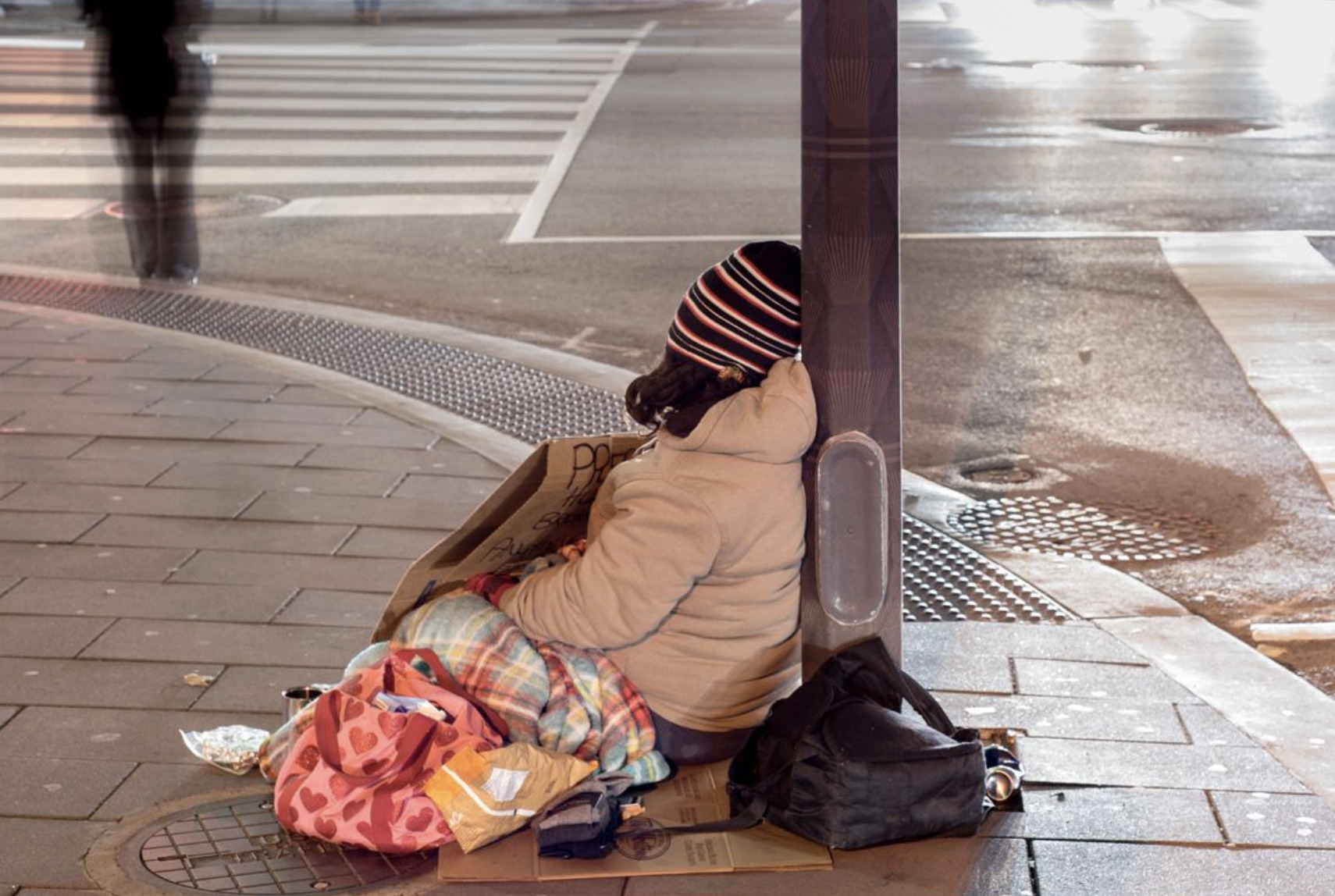
On Tuesday morning, the Toronto Underhoused and Homeless Union gathered in Berczy Park, a few minutes' walk from Union Station, and made an argument that the city did not particularly want to hear thirteen days before the FIFA World Cup arrives. Their argument, summarized in a report and a rally, is that the people Toronto has decided do not belong in its public image are being cleared from it — not by accident, not by neutral enforcement, but as part of what the city is currently calling preparation. The advocates put numbers and names to the claim. They interviewed about fifty unhoused people at Union Station. Some described being beaten by security guards. Some described being dragged out of bathroom stalls. One described being turned away from a city shelter, returning to Union Station, and being assaulted by a security officer in a way that left him with injuries that now make it difficult for him to walk.
This is a story Toronto is going to have to decide how to tell, because the questions inside it are not going away when the tournament begins. They are, more likely, going to get sharper.
The thing that has actually happened
Begin with what the advocates have alleged, separately from what to do about it. The Toronto Underhoused and Homeless Union (TUHU) released a report this week describing what it characterizes as escalating violence and intimidation directed at unhoused people in and around Union Station — a transit hub that, in the absence of sufficient shelter space, has functioned for years as a de facto refuge of last resort.
Their accounts include forced removals, verbal abuse, and physical assault. One incident centres on the men's washroom at Union GO Station, where a respondent says he was pulled out of a stall by security with his pants still around his ankles and left outside. The advocates released photographs they say correspond to the location. Rev. Angie Hocking, an Anglican deacon who has worked with unhoused Torontonians for years, framed the question at the rally in language designed to be uncomfortable. Whose safety, she asked, are we protecting, and who are we willing to harm for the sake of appearances?
The city's response has not been denial. A municipal spokesperson pointed to a pilot project launched in April with Metrolinx, the Toronto Transit Commission, Toronto police and other partners, designed to connect vulnerable people at Union Station with shelter, health care and other supports. That program is real, and the people running it appear to be doing serious work. The advocates do not dispute its existence. What they dispute is whether it is the part of the city's strategy that is actually scaling.
The well-documented pattern the advocates are pointing at
The most useful thing in the TUHU report is also the part that is easiest to overlook. The advocates cite a 2009 United Nations special rapporteur study that catalogued, with examples from multiple host cities, a recurring pattern in the lead-up to mega-events: World Cups, Olympic Games, and the cycle of public-image preparation that surrounds them. Homeless people get displaced. Encampments get cleared. The visible markers of urban poverty get pushed out of the camera angles that the world will see, and the apparatus that does the pushing is, more often than not, security and policing rather than social services.
This pattern is not in dispute among researchers who study mega-events. It is the standard finding. The reason it matters here is that it shifts the burden of explanation. A city that genuinely wants to avoid that pattern has to take active steps to avoid it, because the default trajectory of any mega-event is in the direction of displacement, whether or not anyone in the relevant offices is explicitly choosing it. Indifference is enough.
This is the more interesting version of the question the advocates are asking. It is not whether anyone at City Hall sent an instruction to assault people at Union Station. There is no evidence of that and the allegation is not being made. It is whether the cumulative pressure of "get the city ready" — applied to security contractors, transit operators, public-space managers, and police — produces, predictably, exactly the kind of incident the report describes. The honest answer, drawn from the experience of nearly every host city for the past two decades, is yes.
What the unhoused people themselves are saying
One of the more affecting moments in the coverage this week came from a man identified by the single name Crystofur, interviewed at Union Station. He told reporters he was one hundred per cent sure that on the day the World Cup arrives, there will not be a homeless person at Union Station. He paused. He did not have to finish the sentence. The implication — that he and the people around him are aware they are being moved, that they have nowhere to go, and that the city's calendar is what is moving them — was the entire content of the pause.
Lorraine Lam, an outreach worker with Toronto's Shelter and Housing Justice Network, was less elliptical. The displacement of people from encampments, she said, has ramped up this year ahead of the World Cup in what she described as an attempt to beautify the city. Where, she asked, are people supposed to go? Shelters are full. That last sentence is the load-bearing one. The reason Union Station has become a refuge is that the alternatives the city would prefer people to use do not have the capacity to absorb them, and the reason the alternatives do not have the capacity is a set of policy choices that long predate the tournament.
The advocates wrote in their report that unhoused people are not being removed because they are dangerous. They are being removed, the report says, because their presence conflicts with the image FIFA demands. The wording is sharp, and it can be argued with, but it is also the closest single sentence anyone has produced to a description of what is structurally happening.
What the city says it is doing, and what would actually change the trajectory
The April pilot program is the city's main answer to the question this story raises, and it is a real one. Connecting vulnerable people at Union Station to shelter, health care and other supports is the right model in principle. The problem is one of scale and timing. A program launched in April, two months before the tournament, operating in parallel with a parallel set of pressures pushing in the opposite direction, is not the same thing as a city-wide capacity to actually house the people it is currently asking to leave.
The advocates have spelled out what would change the trajectory, in their view. They are calling for the immediate establishment of 24/7 respite spaces — safe, indoor places people can go — throughout the preparations and the tournament itself. That single ask is the test the next two weeks pose. It is the difference between a city that is genuinely choosing a different path from the standard mega-event playbook and a city that is using the language of support while the default machinery does what default machinery does.
There is also a parallel debate at City Council about whether to keep the FIFA Fan Fest free, which on the surface seems unrelated. It is not. Both questions are versions of the same one: who gets to be in Toronto's public spaces during the World Cup, and on what terms. A free Fan Fest is a statement that the tournament belongs to the people who already live here. An enforcement posture that clears Union Station is a statement that some of the people who already live here do not belong in the version of the city the rest of the world will see. The council cannot answer those two questions in contradictory directions for long without somebody noticing.
What this looks like after June 11
The World Cup will be a success for Toronto in many of the ordinary, measurable ways. Stadiums will fill. The transit system will mostly hold. Local businesses will benefit. The mayor will look mayoral. A great deal of effort by a great many competent people will go into making the tournament work, and most of that effort will work.
The question is what gets remembered when it is over. Mega-events leave residue. They leave infrastructure, both physical and political; they leave a record of which choices the city made under pressure; and they leave, in the histories of the people most directly affected, a memory of how they were treated in the weeks the cameras were arriving. The TUHU report exists because somebody decided to record that memory in real time, rather than wait for it to be written later by people who weren't there.
Toronto has thirteen days to decide what kind of host it wants to be. Not what kind of host it wants to look like — what kind it wants to be. The two are not the same, and the gap between them is exactly the space the advocates spent Tuesday morning standing in.

Oliver Grant
Travel & Active Lifestyle Writer
Oliver explores cities through movement, focusing on cycling as a way to experience culture, architecture, and local identity. He writes about bike travel, urban routes, and active lifestyles, combining storytelling with practical insight. His work has been recognized in digital travel journalism circles, where he has contributed to features on European cycling culture and experiential travel trends.
Advertise With Toronto Union 24
Reach over 500,000 engaged Canadian readers monthly. Premium placements available for Q2 2026.
Learn More Daniel Hughes