
The Raptors Lost to Cleveland in Seven Games and the Series Told You Everything About Where This Team Is
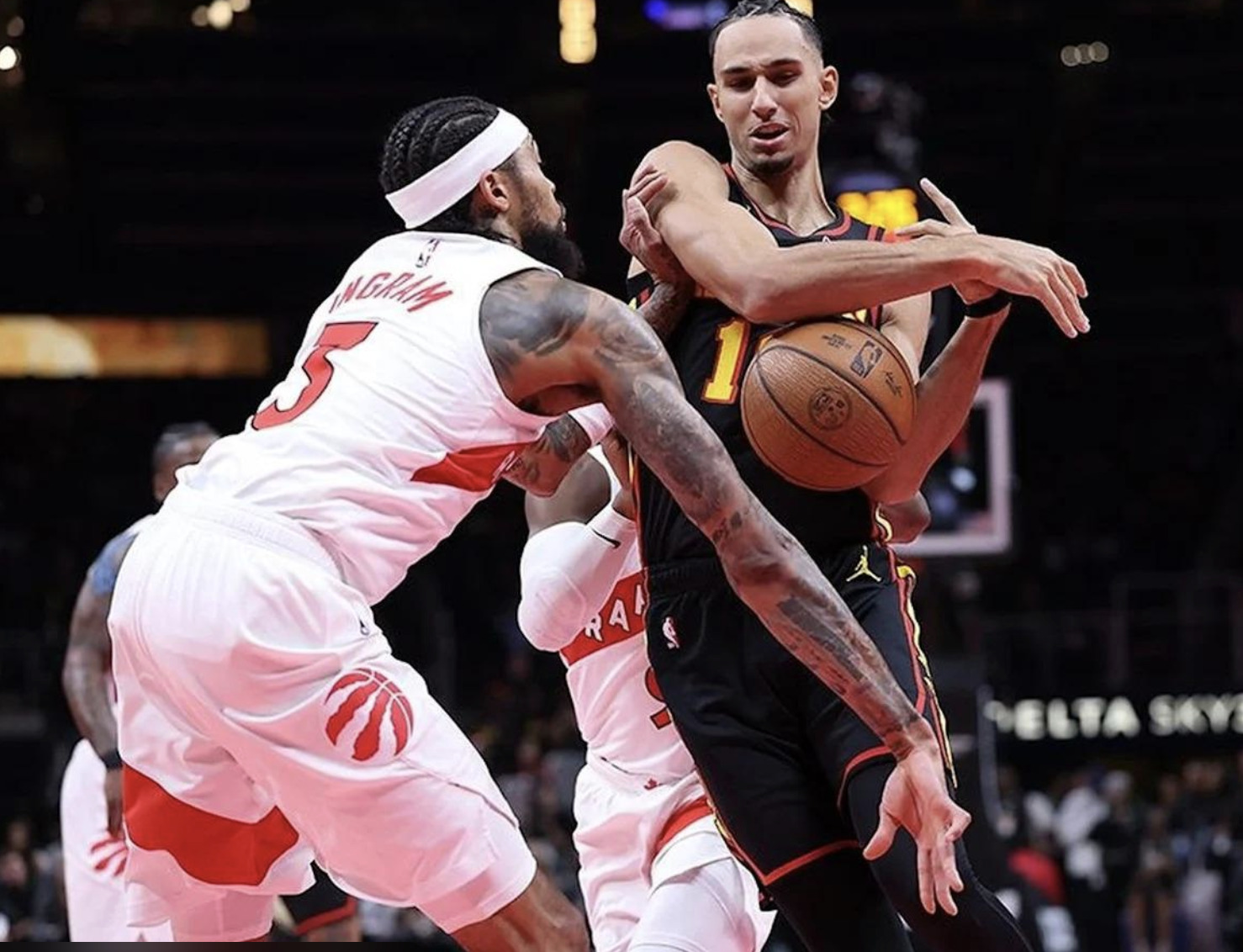
Jarrett Allen finished Game 7 with 22 points and 19 rebounds. Fourteen of those points came in the third quarter alone — the run that turned a competitive game into a structured Cleveland victory. In that third quarter, the Cavaliers outscored the Raptors 35 to 17. By the time the fourth quarter began, the margin was nineteen points. The Raptors cut it to eleven with 2:31 remaining, which is the kind of fact that gets included in summaries to demonstrate the team's fight, but which should not obscure what had already happened.
The final score was 114-102. The series was won by Cleveland, four games to three. Every single game in the series was won by the home team — the first first-round series without a road win in the modern era — which is a peculiar statistic that tells you something important about both teams before you look at any other number.
What the Rebounding Numbers Actually Said
The most important statistic from Game 7 was not on the scoreboard. It was on the glass.
Cleveland outrebounded Toronto 60 to 30. That plus-27 differential is the largest in any winner-take-all playoff game since 1987. In a seven-game series, the team that loses the rebounding battle by 30 boards in the decisive game is not a team that lost narrowly because of one hot quarter. It is a team with a structural problem that the series exposed and the decisive game confirmed.
The Raptors are not a small team in the traditional sense. Scottie Barnes is 6'8" and uses his size intelligently on both ends. Collin Murray-Boyles, who had a genuine breakthrough in this series, is a real physical presence off the bench. The problem is not individual size — it is collective rebounding priority, rotation positioning, and the difference between a team whose center combination can be counted on in a Game 7 and one whose cannot.
Jarrett Allen is a legitimate NBA center who had 20 offensive rebounds for his team in that game, many of them on possessions where Cleveland had already missed and Toronto had given up position to get back on offence. The Cavaliers accumulated 20 offensive boards in total — second-chance points became a sustained structural advantage rather than an occasional one. Against that, the Raptors' compensatory architecture hit its ceiling. You cannot outrebound a team that has Allen and Evan Mobley by switching everything and hoping for 3-point luck. You can be competitive in six games. You cannot win the seventh.
What Scottie Barnes Gave Them
Before any discussion of structural limits, the individual performance deserves its proper accounting.
In Game 6, played in Toronto with the Raptors facing elimination, RJ Barrett hit a 3-pointer with 1.2 seconds remaining in overtime to win 112-110 and force Game 7. Barnes had 25 points, seven rebounds, 14 assists, three steals and three blocks in 48 minutes. That statline belongs in the canon of great individual playoff performances by a Raptor, and there are not many of those.
In Game 7, Barnes put up 24 points, nine rebounds, and six assists. He is the third Raptors player in franchise history to post at least 20 points, five rebounds and five assists in a Game 7. In a series where Toronto was missing Immanuel Quickley to a hamstring strain that ended his postseason before it began, and where Brandon Ingram's availability fluctuated with right heel inflammation, Barnes carried a disproportionate portion of what the Raptors needed to do on both ends.
He is 24 years old. He is playing at an All-Star level in the most pressured situations this franchise has put him in. The question the organisation needs to sit with — seriously, not rhetorically — is whether they are building the team around him that gives him a realistic shot at competing for something meaningful in the years he is at his best.
The answer to that question is not obviously yes. And it has not been obviously yes for long enough that this series felt less like a near-miss and more like a confirmation.
The Eastern Conference Is Not Standing Still
The Cavaliers advance to face the Detroit Pistons in the second round. Detroit beat the Orlando Magic in seven games Sunday, rallying from a 3-1 deficit to win three straight. This is the Eastern Conference in 2026: a team that was in the lottery three seasons ago is in the conference semifinals. The Knicks beat the 76ers in the first round after a seven-game war that averaged 11 million viewers on NBC/Peacock — the most-watched first-round Game 7 in league history. The Cavaliers are reaching the second round for the third consecutive season.
The landscape has shifted away from old power structures in ways that make the Raptors' current position more uncomfortable than a seven-game first-round loss alone would suggest. Toronto is not in a rebuild. They have Scottie Barnes, RJ Barrett, Murray-Boyles, and genuine pieces. What they do not have is a clear path from pieces to contention. The teams making the second round in 2026 are not built around pieces and potential — they are built around systems, specific role clarity, and players at each position who do exactly what is required.
The third-quarter collapse in Game 7 was not a conditioning failure or a communication error. It was a talent gap, revealed at the moment when talent gaps always get revealed: when it matters most, against a team that also wants to win.
The Offseason Question the Raptors Cannot Defer Any Longer
The franchise's decision-making over the past two years has prioritised optionality — keeping cap space, accumulating draft picks, not over-committing to a direction before the picture is clear. That is a defensible strategy. The problem with it as a sustained approach is that the market does not wait.
Heading into this offseason, the Raptors need to answer one question honestly: are they building to compete now, or are they building toward something further away? The honest answer determines everything that follows — which assets get moved, which players get extended, which positions get upgraded. Deferring the answer for another year, in the way the organisation has deferred it for the past two, is itself a choice. It is a choice to let Scottie Barnes spend another year of his prime playing out the implications of a construction question that should have been answered already.
He is 24. The window is real. The decisions made in the next three months will determine whether this franchise is honest about what that window requires — or whether it spends another offseason preserving flexibility while the Eastern Conference continues to consolidate around it.
The seven games against Cleveland were not a referendum on the team's character. They showed genuine fight, genuine creativity, and genuine performance from the players who were available. They were a referendum on construction. And the construction, as it stands, is not good enough.
That is a solvable problem. The question is whether the Raptors solve it.

Daniel Hughes
Sustainability & Policy Correspondent
Daniel is interested in how environmental policy translates into real urban change. He specializes in sustainable mobility, climate-focused city planning, and the political frameworks behind transport systems. His writing brings together data, policy analysis, and on-the-ground impact, offering a clear view of how sustainability initiatives affect everyday urban life.
Advertise With Toronto Union 24
Reach over 500,000 engaged Canadian readers monthly. Premium placements available for Q2 2026.
Learn More Noah Bennett